
When people talk about converting artwork into vector graphics, the first question is often about the software or the quality of the finished file. However, the starting file matters just as much. A clean, well-prepared image can make the conversion process much easier, while a poor-quality or complicated source file may require more manual work.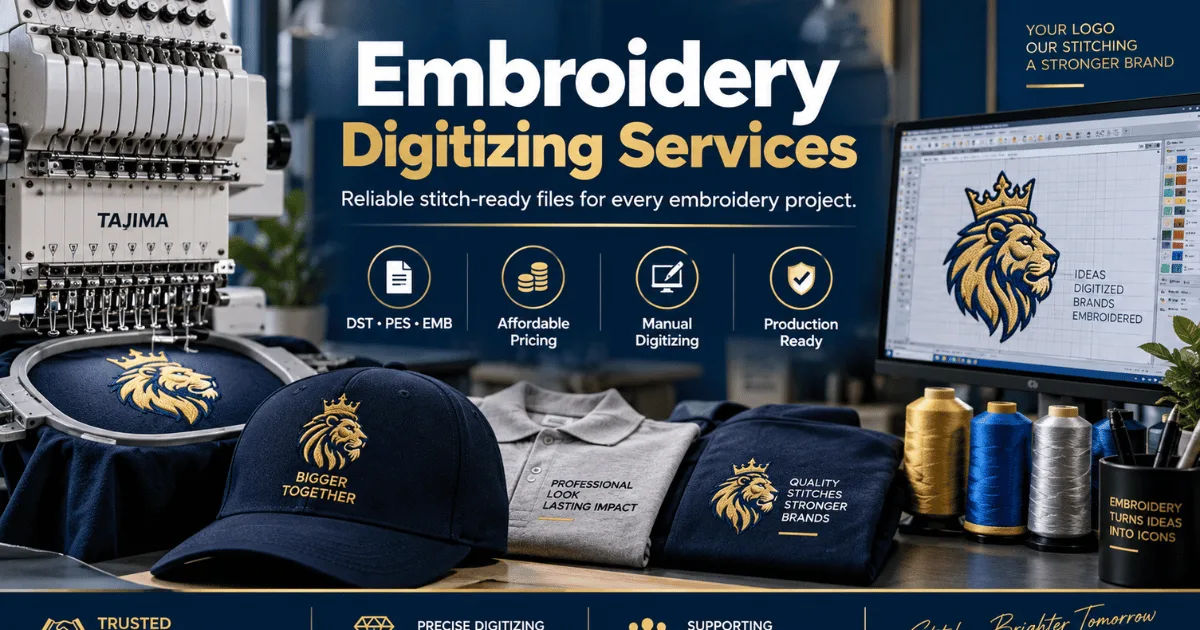
Different types of artwork come in different formats, and not every file behaves the same way during conversion. Some formats contain enough visual information to recreate shapes accurately, while others may be compressed, blurry, or difficult to edit. Knowing which files are suitable before sending artwork for conversion can save time, reduce revisions, and improve the final result.
This is where vector conversion services become useful. Professional conversion specialists can work with many common image formats and recreate artwork as scalable vector graphics. The important point is that the quality of the source file still affects the amount of work required.
What Is a Vector File?
A vector file is an image made from mathematical paths rather than a fixed grid of pixels. Instead of storing every tiny colored square separately, vector artwork describes lines, curves, shapes, and colors through mathematical information.
This gives vector graphics one major advantage: scalability.
A logo created as a vector can often be enlarged from a small business card to a large banner without becoming visibly pixelated. The edges remain smooth because the artwork is mathematically constructed rather than tied to a specific pixel resolution.
Common vector formats include AI, EPS, SVG, and PDF. Some PDF files are vector-based, although others may simply contain raster images. Therefore, the file extension alone does not always tell you what is inside.
Why Does the Source File Matter?
The source file provides the visual information needed to recreate the artwork. The clearer that information is, the easier it is to determine the original shapes, edges, colors, and details.
For example, a high-resolution PNG containing a clean company logo is generally easier to trace than a tiny, heavily compressed JPEG of the same logo.
This does not mean that low-quality files cannot be converted. They can often be converted successfully, but they may require more manual tracing and decision-making.
A professional converter may need to determine where one shape ends and another begins, remove unwanted backgrounds, rebuild damaged curves, and recreate small details.
That is why two customers can submit different files of the same logo and receive different estimates for conversion work.
Which File Formats Are Best for Vector Conversion?
Several file types are commonly accepted for vector conversion. Some are especially useful because they preserve more visual information than others.
JPG and JPEG Files
JPG is probably one of the most common formats people have available. It is widely used for photographs, website images, scanned artwork, screenshots, and logos.
The problem is that JPG uses compression. Repeated saving can introduce artifacts around edges, text, and small details.
A high-resolution JPG can still be an excellent starting point for conversion. In fact, many logos exist only as JPG files because they were downloaded from a website or copied from another document.
For simple artwork, a clean JPG may provide everything needed to recreate the design.
However, a small JPG with blurry edges may require extensive manual tracing.
PNG Files
PNG files are often better suited to artwork conversion because they can preserve sharp edges and support transparent backgrounds.
A PNG logo with a transparent background is particularly helpful. The converter can focus on the artwork without first removing a large white or colored background.
PNG files are also useful for digital illustrations, icons, badges, and other graphics containing solid shapes.
If you have a choice between a low-quality JPG and a high-resolution PNG of the same artwork, the PNG is usually the better starting point.
GIF Files
GIF is another raster format that can be converted into vector artwork. It is most commonly associated with simple web graphics and animations.
A static GIF containing a basic logo or icon can usually be recreated without much difficulty.
However, GIF has a limited color palette. Complex artwork may lose subtle color information when saved in this format.
If the GIF is animated, only the individual frames or selected artwork can normally be converted into a useful vector design. The animation itself is a different issue from vector conversion.
BMP Files
BMP files store raster image information without the same type of compression commonly associated with JPG.
They can contain detailed artwork, although the files can become quite large.
A BMP can be a useful source for conversion when the image is clear and has good resolution. The main limitation is that, like JPG and PNG, it is still a raster format and must be recreated as paths to become a true vector.
TIFF Files
TIFF is frequently used for high-quality scans, printed artwork, photographs, and professional graphics.
A high-resolution TIFF can provide excellent source information for manual tracing.
For scanned logos, illustrations, signs, and artwork, TIFF can sometimes be preferable to a heavily compressed JPG.
The downside is file size. A TIFF may be much larger than the same image saved as a compressed format.
Can PDF Files Be Used?
Yes, but PDFs require some caution.
A PDF can contain actual vector artwork, raster images, text, or a combination of all three. Simply seeing a PDF extension does not guarantee that the contents are vector-based.
For example, a designer may export a logo as a true vector PDF. Another person may scan a printed logo and save that scan as a PDF.
The first PDF may require very little conversion because the paths already exist. The second may need complete manual tracing.
This is why professional conversion specialists often inspect the contents of a PDF before deciding how much work is involved.
What About AI and EPS Files?
AI and EPS are already associated with professional vector artwork.
If the file is genuinely vector-based, it may not need traditional raster-to-vector conversion at all. Instead, the artwork may simply need editing, cleanup, format conversion, or preparation for a particular production method.
However, an EPS or PDF can sometimes contain embedded raster images. In that situation, the file may look professional while still requiring tracing.
A designer may also provide an outdated or partially editable file. Some elements may be outlined while others remain embedded images.
Professional inspection is therefore more reliable than judging the file solely by its extension.
SVG Files and Vector Conversion
SVG is a popular format for websites, applications, digital products, icons, and modern design workflows.
Unlike JPG or PNG, SVG is designed specifically for scalable graphics.
If you already have a clean SVG, you may not need vector conversion. You might instead need editing or optimization.
However, customers sometimes receive SVG files that contain embedded raster images. Such a file technically has an SVG extension but does not necessarily contain fully editable vector artwork.
This distinction is important when preparing artwork for printing, cutting, engraving, or other production processes.
What Makes a Source File Easy to Convert?
File format is only one part of the equation.
The visual condition of the artwork is equally important.
High Resolution
Higher-resolution raster artwork generally provides clearer edges.
If a logo is only 200 pixels wide, important details may disappear when enlarged. A 2,000-pixel version of the same logo can provide much more useful information for tracing.
Higher resolution does not automatically make conversion perfect, but it gives the converter more information to work with.
Clean Edges
Clean edges make it easier to identify the intended shape.
If a black logo sits on a white background with sharp boundaries, tracing is relatively straightforward.
If the same logo has shadows, compression artifacts, blurry edges, and a textured background, more interpretation is required.
Simple Shapes
Simple artwork is usually easier to recreate than highly detailed artwork.
Circles, rectangles, smooth curves, basic lettering, and flat-color illustrations are generally straightforward.
Complex illustrations may contain hundreds or thousands of individual elements. These can take considerably longer to rebuild accurately.
Clear Colors
Clear, distinct colors help with separating artwork into different sections.
For example, a logo with three solid colors is easier to interpret than an old photograph containing dozens of subtle shades.
This is especially important when the finished vector will be used for screen printing, signage, embroidery, cutting, or other production processes.
Which Files Are Difficult to Convert?
Almost any image can potentially be recreated, but some source files create more challenges than others.
Very Small Images
Tiny images are difficult because there simply is not enough information.
If a detailed logo is only 100 pixels wide, small letters and curves may already be distorted.
A converter may need to make educated decisions about what the original artwork looked like.
Blurry Screenshots
Screenshots can work, particularly when they are high resolution. But screenshots taken from small websites, messaging apps, or social media posts may contain compression and scaling artifacts.
If the original design is available, it is almost always better to provide that instead.
Photographs
Photographs can be converted into stylized vector artwork, but this is different from converting a simple logo.
A photograph contains enormous amounts of detail, shading, texture, and color variation.
Turning it into a useful vector illustration may require artistic interpretation rather than simple tracing.
Artwork With Complex Backgrounds
A logo photographed against a wall, shirt, paper texture, or other background can require background removal before conversion.
The converter must first determine which elements belong to the actual design.
This is one reason why supplying an original logo file is better than taking a photograph of a printed logo whenever possible.
Do Scanned Documents Work?
Scanned artwork can be used for conversion.
This is particularly common with older logos, hand-drawn illustrations, signatures, certificates, sketches, and artwork that exists only on paper.
The quality of the scan makes a major difference.
A clean scan at a reasonable resolution gives the converter a much stronger starting point than a photograph taken under poor lighting.
If possible, scan artwork straight, avoid shadows, and use sufficient resolution to capture fine lines.
Can Hand-Drawn Artwork Be Converted?
Yes. Hand-drawn artwork is often converted into vector graphics.
The process may involve tracing the drawing and cleaning irregular lines while preserving the character of the original design.
The key decision is how much of the natural hand-drawn appearance should remain.
If the goal is to reproduce the drawing exactly, the converter may preserve imperfections.
If the goal is to create a polished logo, some lines may need to be rebuilt and smoothed.
This is a good example of why vector conversion is not always an automatic process. Human judgment can matter significantly.
Which File Should You Send for the Best Results?
If you have several versions of the same artwork, send the highest-quality original you have.
A practical order of preference is:
-
Original editable vector artwork
-
High-quality PDF containing vector elements
-
AI or EPS artwork
-
High-resolution PNG
-
High-resolution TIFF
-
High-resolution JPG
-
Screenshot or scanned copy
-
Photograph of printed artwork
This is not an absolute ranking because the contents of a file matter more than the extension alone.
A clean JPG can be more useful than a damaged EPS containing incomplete artwork.
Should You Send Multiple Versions?
When possible, yes.
Providing several versions can help the converter understand the original design.
For example, you might have a JPG logo, an old PDF, and a PNG version. One file may contain clearer lettering while another has better colors.
Comparing multiple references can make it easier to reproduce the intended design accurately.
You should also mention which file represents the correct version if some files are outdated.
How Professional Conversion Handles Difficult Files
Professional vector conversion services do more than simply run an automatic tracing tool.
Automatic tracing can be useful for certain simple graphics, but it may produce unnecessary anchor points, uneven curves, strange corners, or inaccurate details.
A skilled converter can manually adjust paths and rebuild shapes where necessary.
They can also decide whether small details should remain, whether text should be recreated, and how individual colors should be separated.
This is particularly valuable when the final vector will be used commercially.
Choosing the Right Output Format
The best output format depends on what you plan to do with the artwork.
SVG is useful for websites, digital graphics, interfaces, and scalable online artwork.
EPS is commonly used in professional print workflows and applications that support traditional vector production.
AI is useful when the artwork will continue to be edited in Adobe Illustrator.
PDF is convenient for sharing and printing, especially when the artwork needs to be viewed across different systems.
In some cases, receiving multiple formats is the most practical option.
For example, you might keep an AI or EPS master file while using SVG for your website and PDF for printing.
Why Manual Conversion Can Be Better Than Automatic Tracing
Automatic tracing sounds attractive because it can be quick.
The problem is that speed does not always equal quality.
An automated tool may interpret anti-aliased edges as additional shapes. It may create hundreds of unnecessary points or distort curves.
Small text can also become messy.
Manual tracing allows someone to understand the intended design instead of simply copying every pixel variation.
For simple artwork, automated tracing may be perfectly adequate. For logos, branding, and production artwork, careful manual work can produce a much cleaner result.
What Should You Tell the Conversion Specialist?
Along with the source file, explain how you intend to use the artwork.
Tell them whether it is for:
-
Business cards
-
T-shirts
-
Signs
-
Packaging
-
Websites
-
Laser cutting
-
Vinyl cutting
-
Embroidery
-
Large-format printing
-
Promotional products
The intended application can influence how the artwork should be prepared.
For example, a design intended for cutting may need clean closed paths. A logo intended for embroidery may require different preparation altogether.
The more information you provide, the easier it is to produce a useful final file.
Common Mistakes When Sending Artwork
One common mistake is sending only a low-resolution screenshot when the original artwork is available.
Another is assuming that every PDF or EPS file is automatically editable.
People also sometimes crop important parts of a design or send an image with a background that hides the actual edges.
It is also helpful to avoid repeatedly compressing the same JPG. Each generation of compression can make edges less reliable.
If you have the original file, use it.
If you do not, send the clearest version available and explain what the artwork is supposed to look like.
PSA Digitizing is a dependable embroidery digitizing company helping customers turn their artwork and logos into professional, machine-ready embroidery files. We work with popular formats such as DST, PES, JEF, and more, so your design can be prepared for a wide range of embroidery machines.
Our team, based in Clarkston, Georgia, USA, combines practical digitizing experience with modern software to create accurate designs with clean stitching and carefully managed details. We keep our services straightforward, affordable, and focused on what customers actually need.
With a 4.5+ star rating on Trustpilot, PSA Digitizing has earned positive feedback and lasting trust from embroidery businesses and hobbyists. Whether you need a logo digitized, a custom patch prepared, or a design converted into a machine embroidery file, we're ready to help. Visit psadigitizing.com to get started.
Conclusion
The best files for vector conversion are generally those that provide clear, accurate information about the original artwork. High-resolution PNG, TIFF, JPG, scanned artwork, and clean PDFs can all be useful, while AI, EPS, and genuine vector PDFs may already contain editable vector elements.
The file extension is not the only thing that matters. Resolution, sharpness, color separation, background quality, artwork complexity, and the intended use all influence the conversion process.
A simple logo with clean edges can often be recreated quickly, even when the original is only available as a JPG or PNG. More complicated artwork may require careful manual tracing and reconstruction.
When choosing vector conversion services, it is best to provide the highest-quality source file you have. If several versions are available, sending them together can help the specialist identify the most accurate reference.
Most importantly, explain what you plan to do with the finished artwork. A vector prepared for a website may have different requirements from one intended for large-format printing, cutting, packaging, or embroidery.
Good source artwork makes the process easier, but even imperfect files can often be transformed into professional vector graphics when they are handled carefully. The goal is not simply to change a file extension. The goal is to recreate the artwork as clean, editable, scalable paths that remain useful wherever the design needs to go.