

Mobile gaming has become one of the most popular forms of entertainment in the modern world. People enjoy playing games on their smartphones and tablets because these devices are portable, convenient, and easy to use. However, as mobile games become more advanced, players are paying greater attention to the devices they use. Screen size, battery performance, processing power, sound quality, and comfort can all influence the overall gaming experience. This raises an important question: can tablets provide a better gaming experience than smartphones?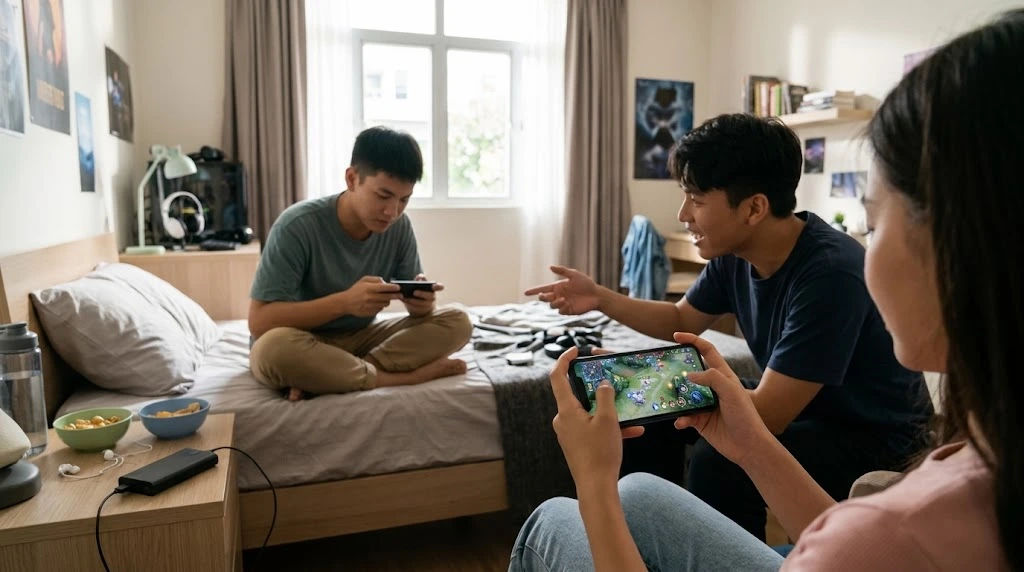
Choosing the right device can make a noticeable difference in how players enjoy their favourite titles. Mobile App Gaming has developed beyond simple puzzles and casual entertainment. Many modern games feature detailed graphics, multiplayer environments, realistic animations, and complex controls. Tablets offer several advantages that can make these experiences more enjoyable, particularly for people who prefer larger displays and longer gaming sessions.
Although smartphones remain popular because they are compact and easy to carry, tablets provide features that deserve consideration. Understanding the differences between these devices can help players decide whether a tablet is the better choice for their gaming needs.
The Role of Tablets in Mobile Gaming
Tablets occupy a useful position between smartphones and laptops. They combine touchscreen convenience with larger displays and, in many cases, more powerful hardware than entry-level smartphones.
Their design makes them suitable for different gaming styles. Players can enjoy strategy games, racing titles, adventure games, puzzles, simulations, and multiplayer experiences on a larger screen.
Unlike traditional gaming consoles, tablets do not require a dedicated television or complicated setup. Players can download games, connect to the internet, and begin playing within minutes.
However, not every tablet provides the same performance. Hardware specifications, operating systems, software optimisation, and display quality all influence how well a device handles demanding games.
Why Tablets Can Provide a Better Gaming Experience
Several features make tablets attractive to gaming enthusiasts. Their larger screens, comfortable viewing experience, and battery capacities can offer practical benefits.
Larger Screens Improve Gameplay
One of the biggest advantages of tablets is their display size. Smartphones usually have relatively small screens, which can make certain games feel crowded.
Tablets provide more space for visual elements, menus, characters, maps, and controls. This additional space can help players understand what is happening without constantly zooming or adjusting their viewing position.
Mobile App Gaming pk365 strategy games often contain detailed maps and several interface elements. A larger display makes it easier to view different sections of the game simultaneously.
Racing games can also benefit from bigger screens because players can see more of the track and surrounding environment.
A larger display does not automatically make someone a better player, but it can make gameplay more comfortable and visually enjoyable.
Better Visibility of Game Details
Modern games frequently include detailed environments, small interface elements, and complex animations.
On a smaller smartphone screen, certain details may be difficult to notice. Tablets can display these elements more clearly, depending on their resolution and display quality.
This advantage is particularly useful in adventure games where players explore large environments and search for objects.
A high-resolution tablet can also make colourful graphics, character designs, and environmental details more enjoyable.
Players who appreciate visual quality may find this difference especially noticeable.
More Comfortable Touch Controls
Touchscreen controls are an important part of mobile gaming. However, smaller smartphones can make it difficult for some players to position their fingers comfortably.
Tablets offer more screen space, allowing developers to spread controls across a wider area.
This can reduce accidental touches and provide a more natural arrangement for certain games.
For example, multiplayer battle games may require players to move characters, aim, activate abilities, and interact with menus simultaneously.
A tablet can provide additional room for these actions.
Nevertheless, very large tablets may require players to stretch their fingers or hold the device differently. Comfort depends on the player's hand size, device weight, and control layout.
Hardware Performance and Gaming Quality
Screen size is only one part of the gaming experience. A tablet must also have suitable hardware to run demanding applications smoothly.
Powerful Processors Support Smooth Gameplay
The processor plays an important role in determining how efficiently a device runs games.
Modern processors handle calculations, animations, game physics, and other operations required during gameplay.
A tablet with a capable processor can provide smoother performance in demanding games, particularly when it has sufficient memory and effective thermal management.
However, buyers should not assume that every tablet is more powerful than every smartphone.
Premium smartphones can outperform inexpensive tablets. Comparing actual processor specifications and gaming benchmarks is more useful than comparing devices based only on their size.
RAM Helps Manage Gaming Applications
Random Access Memory, commonly known as RAM, temporarily stores information that applications need while running.
Games with detailed graphics and complex environments can require considerable memory.
A tablet with sufficient RAM may handle demanding games more comfortably and switch between supported applications more efficiently.
For casual games, modest memory may be enough. However, players who enjoy large multiplayer titles or graphically demanding applications should pay attention to available RAM.
More RAM does not always guarantee better performance. Processor quality, software optimisation, and storage speed also matter.
Graphics Performance Creates Better Visuals
Graphics processing determines how effectively a device renders images, textures, lighting, and animations.
A tablet with a capable graphics processor can display detailed game environments and maintain smoother frame rates.
This is particularly important for racing, action, and adventure games.
Players should also consider display refresh rates. A higher refresh rate can make supported games appear smoother, although the device and game must both support the feature.
A tablet with excellent graphics hardware and a suitable display can provide an impressive gaming experience.
Battery Life and Longer Gaming Sessions
Battery performance is another important factor when choosing a gaming device.
Gaming applications can consume significant power because they use the processor, graphics hardware, display, speakers, and wireless connections simultaneously.
Larger Batteries Can Support Extended Play
Many tablets have larger batteries than smartphones because their physical size allows manufacturers to include greater battery capacity.
This can be helpful for people who enjoy longer gaming sessions.
Players may spend more time exploring virtual environments, completing missions, or participating in multiplayer matches without needing to recharge as frequently.
However, battery capacity alone does not determine battery life.
A large display, powerful processor, high brightness, and demanding game can consume considerable energy.
Therefore, buyers should consider real-world battery performance rather than relying entirely on battery specifications.
Better Battery Management Improves Convenience
Modern tablets often include power management features designed to reduce unnecessary energy consumption.
These features can help control background applications, screen brightness, and other processes.
Players can improve battery life by lowering display brightness, disabling unnecessary background services, and closing applications they are not using.
It is also important to avoid playing demanding games while charging for extended periods if the device becomes excessively hot.
Managing temperature and charging habits can help maintain battery health.
Are Tablets Better for Different Types of Games?
Not every game benefits from the same device features. Some titles require large displays, while others are easier to play on smaller devices.
Strategy and Simulation Games
Strategy and simulation games are particularly suitable for tablets.
These titles often feature large maps, multiple menus, resource management systems, and detailed interfaces.
A larger display allows players to examine information more comfortably.
City-building games, farming simulations, and management titles can also feel more enjoyable because players have additional space to interact with different elements.
For people who enjoy thoughtful gameplay rather than quick sessions, tablets can be an excellent choice.
Racing and Adventure Games
Racing games can benefit from wider displays because players can see more of the track and surrounding environment.
Larger screens also make detailed scenery and vehicle designs more noticeable.
Adventure games can benefit in similar ways. Exploring locations, examining objects, and following missions may feel more immersive on a tablet.
However, players who prefer physical controls can consider compatible Bluetooth controllers.
Multiplayer and Competitive Games
Multiplayer games require responsive controls, stable internet connections, and consistent performance.
Tablets can provide additional screen space for movement controls, aiming buttons, and other interface elements.
This can be useful in competitive games where several actions must be performed quickly.
However, a tablet is not automatically better for competitive gaming.
A lightweight smartphone may be easier to hold during fast-paced matches. Some players also prefer the familiar control positioning of smaller devices.
The best choice depends on the player's individual preferences and the specific game's design.
Internet Connectivity and Online Gaming
A good internet connection is essential for many modern games.
Tablets generally support Wi-Fi connectivity, allowing players to connect to home networks, public hotspots, and other wireless internet sources.
Wi-Fi Provides Stable Gaming Connections
A reliable Wi-Fi connection can support online multiplayer matches, game updates, downloads, and cloud-based features.
Tablets with modern Wi-Fi standards may offer strong wireless performance when connected to a compatible router.
However, actual performance depends on router quality, network congestion, distance, and internet service.
Players should use a reliable connection to reduce lag and interruptions during competitive matches.
Cellular Connectivity Offers Additional Flexibility
Some tablets support cellular connectivity through compatible mobile networks.
These devices allow players to access the internet without depending entirely on Wi-Fi.
This feature can be useful when travelling or playing away from home.
However, cellular connectivity may increase the purchase price and require a separate data plan.
Players should also consider how much data their favourite games consume, particularly when downloading updates or using online multiplayer features.
Display Quality Makes a Difference
The display is one of the most noticeable features of any tablet.
A high-quality screen can improve visibility, colour reproduction, and overall enjoyment.
Resolution and Colour Accuracy
Display resolution determines how many pixels are used to create an image.
Higher resolutions can provide sharper text, clearer characters, and more detailed environments.
Colour accuracy also matters because games often contain colourful graphics, lighting effects, and detailed visual designs.
An attractive display can make casual and demanding games more enjoyable.
Refresh Rate and Responsiveness
Refresh rate refers to how many times a display updates its image each second.
A standard 60Hz display refreshes up to 60 times per second, while a 120Hz display can refresh up to 120 times per second.
Higher refresh rates can make supported games appear smoother.
However, players should remember that the game itself must support higher frame rates.
A high-refresh-rate display cannot guarantee smoother gameplay if the processor cannot maintain the required performance.
Sound Quality and Gaming Immersion
Audio is another feature that can improve the overall gaming experience.
Many tablets include stereo speakers that provide a wider sound experience than basic mobile speakers.
This can make background music, environmental sounds, and game effects more enjoyable.
In multiplayer games, sound can also provide useful information about nearby opponents or important events.
For example, hearing footsteps or directional audio cues may help players understand what is happening around their characters.
Players who want a more private experience can connect compatible wired or wireless headphones.
Good audio can make games feel more immersive, although speaker quality differs between tablet models.
Portability and Physical Comfort
Despite their advantages, tablets also have some limitations.
Their larger size can make them less convenient to carry compared with smartphones.
Tablets Are Less Convenient for Travel
Smartphones easily fit into pockets and small bags. Tablets usually require additional storage space.
This difference matters to people who regularly travel, commute, or play games during short breaks.
A tablet may be suitable for playing at home, but a smartphone can be more practical when travelling frequently.
Device Weight Can Affect Comfort
Tablets are generally heavier than smartphones.
Holding a tablet for several hours can cause discomfort in the hands, wrists, or arms.
Using a stand, adjustable holder, or supported gaming controller can improve comfort.
Players should also take regular breaks to reduce physical strain.
A lightweight tablet may be a better option for people who want a balance between screen size and portability.
Choosing the Right Tablet for Mobile Gaming
Selecting a suitable tablet requires more than choosing the largest available display.
Buyers should compare several important specifications before making a purchase.
Consider the Processor
Look for a modern processor that can handle the games you regularly play.
Researching gaming performance and supported graphics features can help you avoid purchasing an underpowered device.
A powerful processor is particularly important for demanding 3D games.
Check RAM and Storage Capacity
Choose sufficient RAM for your preferred games and everyday applications.
Storage is equally important because modern games can require substantial installation space.
Additional storage can also be useful for downloading updates, saving media, and installing multiple applications.
Some tablets support expandable storage, while others rely entirely on internal capacity.
Examine Battery Performance
Consider battery capacity and independent battery testing.
A tablet that performs well during ordinary browsing may behave differently when running demanding games.
Look for information about gaming battery life whenever possible.
Compare Screen Size and Resolution
Choose a display that provides enough room for comfortable gameplay without making the device difficult to handle.
Resolution, brightness, colour quality, and refresh rate should also influence your decision.
Check Controller Compatibility
Some players prefer physical controllers instead of touchscreen controls.
Before buying a tablet, check whether it supports the controllers and accessories you want to use.
A compatible controller can make racing, platform, and action games more comfortable.
Tablets Versus Smartphones for Gaming
Both devices have advantages, and neither is the perfect option for every player.
|
Feature |
Tablets |
Smartphones |
|---|---|---|
|
Screen size |
Usually larger |
Usually smaller |
|
Portability |
Less convenient |
Highly convenient |
|
Touch controls |
More screen space |
Compact controls |
|
Battery capacity |
Often larger |
Usually smaller |
|
Physical comfort |
Depends on size and weight |
Easier for one-handed use |
|
Gaming performance |
Varies by model |
Varies by model |
|
Viewing experience |
More spacious |
More compact |
|
Travel convenience |
Requires more space |
Easy to carry |
Tablets are generally attractive for people who prefer larger displays and longer gaming sessions.
Smartphones remain suitable for players who prioritise convenience and portability.
The most important consideration is how a person intends to use their device.
Common Mistakes to Avoid When Buying a Gaming Tablet
Some buyers focus too heavily on screen size while ignoring other important specifications.
This can lead to disappointment when a device struggles with demanding applications.
One common mistake is purchasing a tablet with insufficient processing power. A large screen cannot compensate for poor performance.
Another mistake is ignoring RAM and storage. Modern games can require significant resources, and limited capacity may create unnecessary problems.
Buyers should also avoid assuming that every expensive tablet is designed specifically for gaming. Some premium models prioritise productivity, drawing, or entertainment instead.
Checking software support is equally important. An older tablet may no longer receive regular updates or support newer game requirements.
Finally, consider the device's weight, charging speed, temperature management, and accessory compatibility before making a decision.
Tips for Getting the Best Gaming Experience on a Tablet
After purchasing a suitable device, players can make several adjustments to improve their experience.
Keep the software updated: System updates can improve security, compatibility, and device performance.
Manage background applications: Close unnecessary applications to free up system resources.
Adjust graphics settings: Select graphics quality that allows games to run smoothly without excessive heating.
Maintain a stable connection: Use reliable Wi-Fi or suitable cellular connectivity for online matches.
Control screen brightness: Choose a comfortable brightness level to reduce battery consumption.
Use suitable accessories: A tablet stand, gaming controller, or comfortable headphones can improve convenience.
Monitor device temperature: Avoid covering ventilation areas and take breaks if the device becomes unusually hot.
Protect the screen: A suitable protective case and screen protector can help prevent accidental damage.
These simple practices can help players enjoy their games while maintaining their devices properly.
Are Tablets Worth Buying Specifically for Gaming?
Whether a tablet is worth purchasing depends on individual gaming habits and budget.
For someone who plays regularly at home, enjoys detailed graphics, and prefers larger displays, a tablet can be a valuable investment.
It can also serve several purposes beyond gaming. Users can watch videos, read books, attend online classes, browse websites, and complete productivity tasks.
This versatility can make a tablet more practical than purchasing a dedicated gaming device for occasional entertainment.
However, people who mostly play short games during travel may find a smartphone more convenient.
Budget is another important consideration. A good gaming smartphone may provide better performance than an inexpensive tablet.
Therefore, buyers should compare actual specifications, performance reviews, and prices before choosing.
The ideal device is the one that offers the right combination of performance, comfort, portability, and value.
Conclusion
Tablets can be better than smartphones for many types of gaming, particularly when screen size, visibility, and comfortable controls are important. Their larger displays provide additional space for complex interfaces, detailed environments, and interactive elements. Many tablets also offer substantial battery capacities, capable processors, and high-quality speakers that can improve the overall entertainment experience.
However, choosing a tablet does not automatically guarantee better performance. Hardware specifications, graphics capabilities, memory, display refresh rates, and software optimisation remain important factors. An inexpensive tablet may struggle with demanding games, while a premium smartphone may deliver excellent performance despite having a smaller display.
The best choice depends on individual preferences and gaming habits. Players who enjoy strategy games, adventure titles, simulations, and longer gaming sessions may appreciate the advantages of a tablet. Those who prioritise portability, quick access, and convenient one-handed gameplay may prefer smartphones.
Ultimately, Mobile App Gaming is about enjoying games through a device that meets personal expectations. Tablets provide an appealing combination of larger screens, touchscreen convenience, and entertainment versatility. By comparing specifications, considering comfort, and selecting a device that supports preferred games, players can make a confident purchasing decision.
A well-chosen tablet can become an excellent gaming companion, offering enjoyable experiences at home and during travel. While smartphones remain valuable gaming devices, tablets deserve serious consideration for anyone who wants more screen space and a comfortable way to enjoy modern mobile games.