
Modern businesses handle more information, tasks, customer requests, and internal processes than ever before. When these activities are managed manually or through disconnected software, employees can spend a large part of their day completing repetitive work instead of focusing on higher-value responsibilities. This is where ai consulting services can make a practical difference.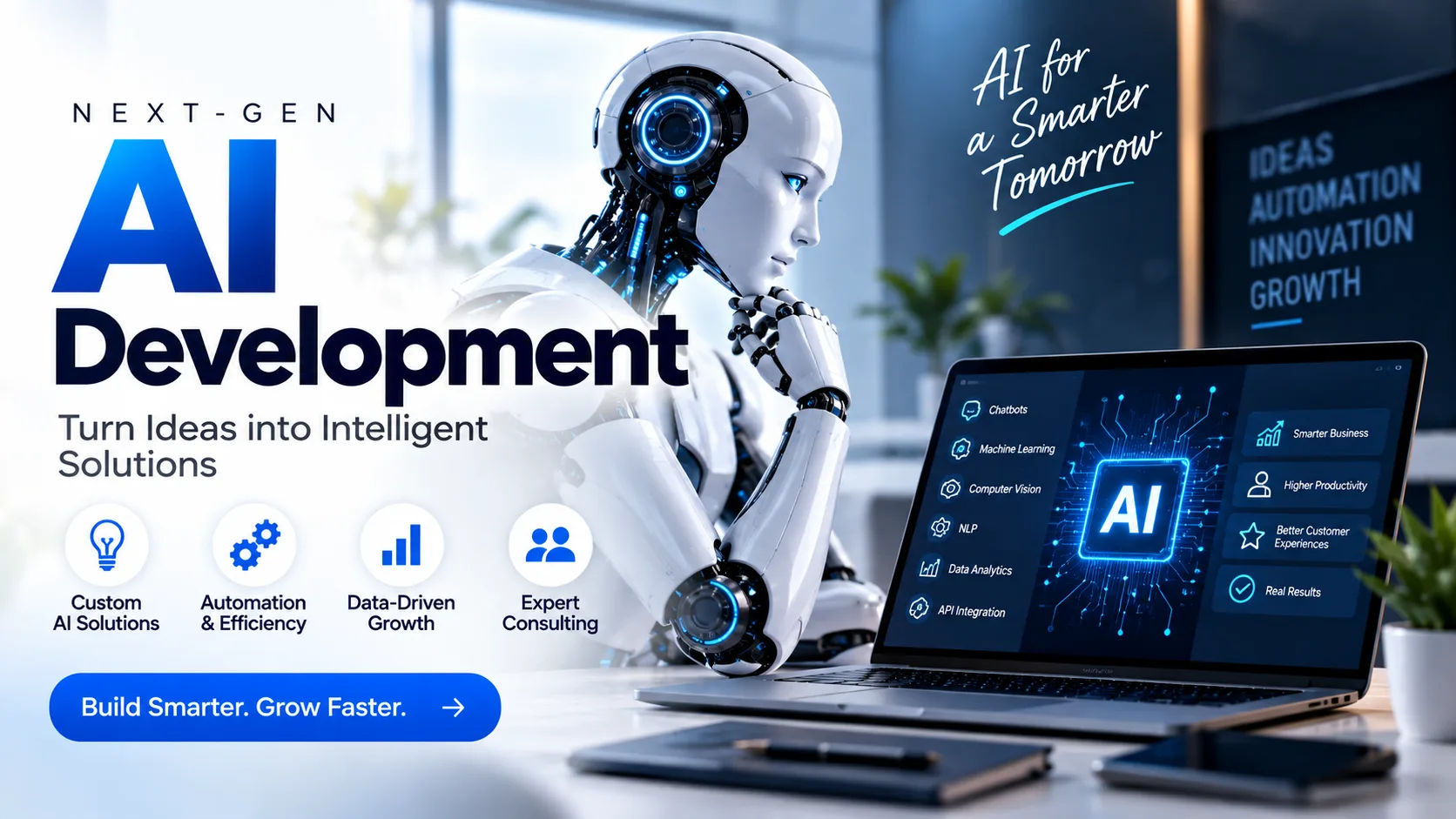 AI consulting is not simply about adding artificial intelligence to a business because AI is popular. The real goal is to identify workflow problems, determine where AI can help, and implement solutions that make everyday operations faster, more consistent, and easier to manage.
A well-designed AI solution can automate repetitive activities, organize information, assist employees with decisions, improve communication, and reduce unnecessary delays. However, these benefits depend on choosing the right processes and implementing technology correctly.
Businesses therefore need to look beyond the technology itself. They need to understand how their current workflows operate, where bottlenecks exist, and which improvements will provide meaningful value.
Understanding Workflow Problems in Modern Businesses
Before discussing how AI can improve workflows, it is important to understand why workflows become inefficient in the first place.
A workflow is the sequence of activities required to complete a business process. It may involve employees, software applications, databases, documents, customers, or external systems.
For example, a customer support workflow might begin when a customer submits a question. The request may then be assigned to an employee, reviewed, answered, recorded in a customer relationship management system, and followed up later.
If every step is performed manually, the process can take considerable time.
Employees may need to copy information between systems, search through documents, send repetitive emails, update records, and check whether tasks have been completed.
These small activities may not appear serious individually. However, when they occur hundreds or thousands of times, they can become a major source of wasted time.
How AI Consulting Identifies Workflow Bottlenecks
One important role of ai consulting services is examining existing business processes before recommending an AI solution.
Consultants can map how information moves through an organization. They may look at where employees spend the most time, which tasks are repeated frequently, and where delays occur.
This process can reveal problems that are not always obvious to business owners.
For instance, a company might believe that its sales team needs better software. After analyzing the workflow, the actual problem may be that sales employees spend several hours each week manually preparing customer records.
In that situation, replacing the entire sales platform may not be necessary. Automating data entry could solve a much larger portion of the problem with less disruption.
This type of process analysis helps businesses focus on practical improvements rather than adopting AI simply for its own sake.
Automating Repetitive Tasks
One of the most direct ways AI can improve workflows is by reducing repetitive manual work.
Many business processes contain activities that follow predictable patterns. These can include sorting emails, categorizing documents, extracting information from forms, creating summaries, scheduling appointments, and routing customer inquiries.
When these tasks are automated, employees have more time for activities that require judgment, creativity, communication, and problem-solving.
For example, an organization receiving hundreds of customer emails every day could use AI to classify incoming messages based on their subject and urgency.
A billing question could be routed toward the finance team, while a technical issue could be directed to technical support.
The employee does not necessarily need to spend time manually sorting every message.
The objective of ai consulting services is to determine where this type of automation can be introduced without creating unnecessary complexity.
Improving Data Processing
Businesses generate large amounts of data through transactions, customer interactions, forms, reports, applications, and internal systems.
Processing this information manually can be slow and vulnerable to errors.
AI systems can help extract, organize, classify, and summarize information from large volumes of data.
Consider a business that receives invoices from multiple suppliers. Employees may need to review each document, identify the supplier, find the invoice number, record the amount, and enter the information into accounting software.
An AI-supported workflow can assist with extracting these details automatically.
The information can then be checked and transferred into the appropriate system.
This does not mean that every process should be fully automated. In many situations, human review remains important, especially when financial, legal, or sensitive information is involved.
The better approach is often to automate routine processing while allowing employees to review exceptions.
Reducing Manual Data Entry
Manual data entry is one of the most common sources of workflow inefficiency.
Employees may enter the same customer information into multiple systems. They may copy information from emails into spreadsheets or transfer details from documents into databases.
Every additional manual entry creates another opportunity for mistakes.
AI and workflow automation can reduce unnecessary duplication by extracting information and moving it between connected systems.
For example, information submitted through an online form could be analyzed automatically and transferred to a customer management platform.
The employee can then focus on reviewing the information rather than typing it from scratch.
This is one area where ai consulting services can provide value because consultants can examine the entire information flow instead of automating only one isolated task.
Improving Customer Service Workflows
Customer service is another area where AI can support faster workflows.
Customer service teams often handle repetitive questions about orders, account information, appointments, product features, returns, and basic troubleshooting.
AI assistants can help answer routine questions or provide employees with suggested responses.
The system can also summarize previous conversations so that an employee does not have to read a long interaction history before helping a customer.
This can reduce response times while allowing human representatives to concentrate on more complicated situations.
AI should not necessarily replace human customer service. Instead, it can act as a support layer that handles simple activities and provides useful information to employees.
Making Internal Communication More Efficient
Internal communication can consume a surprising amount of working time.
Employees may attend meetings, read long documents, search through previous conversations, and write summaries.
AI tools can help organize this information.
For example, an AI system can summarize a lengthy meeting and identify major discussion points, assigned tasks, and deadlines.
Employees who could not attend the meeting may then review the summary instead of watching the entire recording.
Similarly, AI can help employees search large collections of internal documents using natural language.
Instead of searching for an exact phrase, an employee can describe what they are looking for in ordinary language.
This can make internal knowledge easier to access.
Supporting Better Task Management
Workflow efficiency also depends on knowing what needs to happen next.
In complicated organizations, tasks can become delayed because employees do not know who is responsible for them or because information is spread across several systems.
AI-powered workflow systems can help identify pending tasks and recommend the next action based on available information.
For example, when a customer submits a request, the system may identify the appropriate department, assign the task, and notify the responsible employee.
It can also monitor the status of the request and identify cases that have remained unresolved for too long.
These capabilities can reduce the number of tasks that are forgotten or delayed.
Improving Workflow Decision Support
Not every business decision can or should be automated.
However, AI can provide employees with information that helps them make decisions more efficiently.
For example, an employee reviewing a customer request may need to examine purchase history, previous conversations, account information, and relevant company policies.
AI can organize this information and produce a concise summary.
The employee still makes the final decision, but less time is spent collecting information.
This distinction is important. Effective AI workflow design often focuses on improving human decision-making rather than attempting to eliminate human involvement.
Connecting Disconnected Business Systems
Another major workflow problem is disconnected software.
A business might use one application for customer management, another for accounting, another for communication, and another for project management.
When these systems do not communicate effectively, employees may manually move information between them.
This creates delays and increases the possibility of inconsistent records.
AI implementation can be combined with integrations and automation tools to create smoother information flows.
For example, an incoming customer request could trigger a series of automated actions across different systems.
The request might be recorded in a customer platform, assigned to a team member, added to a task system, and followed up through an automated notification.
The exact implementation depends on the organization's software environment.
This is why ai consulting services often begin with a review of existing technology rather than immediately introducing a new AI platform.
Creating More Consistent Processes
Human employees naturally perform tasks differently.
Two employees may follow slightly different procedures when responding to similar customer requests. One may record information in a particular format while another uses a different approach.
AI-supported workflows can introduce more consistency.
For example, a system can use predefined rules and AI-generated recommendations to ensure that customer requests are categorized according to the same basic standards.
Consistency can make it easier to monitor performance and identify problems.
However, organizations should avoid making workflows so rigid that employees cannot handle unusual situations.
Good workflow design combines standardized processes with clear opportunities for human intervention.
Improving Workflow Scalability
A workflow that works for a small business may become difficult to manage as the organization grows.
When customer volume increases, simply hiring more people may not be the most efficient way to handle every additional task.
AI can help businesses scale certain processes without increasing manual workload at the same rate.
For example, an organization may be able to process more documents, classify more customer inquiries, or generate more routine summaries without requiring employees to perform every step manually.
This does not mean AI eliminates the need for employees.
Instead, it can allow existing teams to handle greater workloads by reducing repetitive activities.
Helping Employees Focus on Higher-Value Work
One of the most important workflow benefits of AI is the ability to redirect employee attention.
Employees are often hired for their expertise, judgment, communication skills, and ability to solve problems.
When they spend large amounts of time copying data, sorting messages, preparing basic reports, or searching for information, those skills are underused.
AI can take responsibility for parts of these repetitive workflows.
Employees can then spend more time speaking with customers, developing strategies, solving unusual problems, improving products, and making decisions.
The result is not simply a faster workflow. It can also create a better use of human expertise.
Using AI for Document Workflows
Documents remain a major part of many businesses.
Contracts, invoices, applications, reports, forms, proposals, and customer records can create significant administrative workloads.
AI can help analyze documents and extract relevant information.
For example, a business could use an AI system to identify important fields in incoming forms and organize those details into structured records.
AI can also summarize long documents when employees need a quick understanding before reviewing the full material.
For sensitive documents, businesses should establish appropriate security controls and determine which information can be processed by AI systems.
Monitoring Workflow Performance
Workflow improvement should not end after an AI tool has been installed.
Businesses need to measure whether the new process is actually producing better results.
Useful measurements can include processing time, error rates, response times, employee workload, customer satisfaction, and the number of tasks completed.
Suppose a company introduces AI to process customer requests.
The company can compare the average processing time before and after implementation.
If the workflow becomes faster but error rates increase, additional review or process changes may be necessary.
This ongoing measurement is an important part of successful ai consulting services because technology should be evaluated based on business outcomes rather than novelty.
Maintaining Human Oversight
AI can improve workflows, but it is not perfect.
AI systems can misunderstand information, produce incorrect outputs, or make poor recommendations when they receive incomplete or unusual data.
For this reason, organizations should determine which tasks require human review.
Low-risk repetitive tasks may be highly suitable for automation.
Sensitive decisions involving finances, legal matters, employment, security, or important customer outcomes may require stronger human oversight.
A responsible workflow clearly defines when AI can act independently and when a person must review the result.
Protecting Business Data
Workflow automation often involves sensitive information.
Businesses may process customer names, contact details, financial records, internal documents, intellectual property, or other confidential data.
Introducing AI without considering data security can create unnecessary risks.
Companies should understand where data is stored, how it moves between systems, who can access it, and how AI providers handle submitted information.
Access controls, encryption, authentication, monitoring, and appropriate data-handling policies can all play a role.
Security should therefore be considered during workflow design rather than added after implementation.
Training Employees to Work With AI
Technology alone does not improve a workflow.
Employees need to understand how the new system works and what responsibilities remain with them.
Training should explain how to use the AI tools, how to review AI-generated results, and what to do when the system produces an uncertain or incorrect response.
Employees should also understand when they are expected to override or question an AI recommendation.
Good training can reduce resistance and help workers understand that AI is intended to support their workflow rather than simply add another layer of software.
Choosing the Right Processes for AI
Not every workflow is a good candidate for AI.
Some tasks may be too unpredictable, too sensitive, or too small to justify the cost of implementation.
Businesses should consider factors such as task volume, repetition, complexity, data availability, potential savings, and risk.
A high-volume repetitive task with clear inputs and outputs may be a strong candidate.
A rare task requiring complicated human judgment may provide less opportunity for automation.
This is another reason businesses often use ai consulting services to evaluate opportunities before committing resources to implementation.
Starting With Small Workflow Improvements
Businesses do not necessarily need to transform their entire operation at once.
Starting with a focused workflow can make implementation easier.
For example, an organization could begin by automating document classification, customer inquiry routing, meeting summaries, or internal knowledge searches.
The results can then be measured.
If the project produces useful improvements, the organization can gradually expand AI into additional workflows.
This approach can reduce disruption and make it easier to identify problems before they affect larger parts of the business.
Common Mistakes When Improving Workflows With AI
One common mistake is adopting AI before understanding the existing workflow.
If the underlying process is poorly designed, adding AI may simply automate an inefficient process.
Another mistake is expecting AI to work without human supervision.
AI-generated information should be reviewed according to the risk level of the task.
Businesses can also make the mistake of focusing entirely on technical capabilities while ignoring employee needs.
A workflow that looks impressive from a technical perspective may be frustrating if employees find it difficult to use.
Successful implementation therefore requires attention to technology, people, processes, and measurable business outcomes.
How AI Workflow Improvements Affect Business Productivity
The overall effect of AI workflow improvements can extend beyond saving a few minutes on individual tasks.
When repeated delays are removed, entire processes can become faster.
Employees may spend less time searching for information. Customers may receive quicker responses. Managers may receive more organized reports. Teams may have clearer visibility into pending tasks.
These improvements can also build on one another.
For example, faster data processing can lead to faster reporting. Better reporting can support quicker decisions. Quicker decisions can improve customer response times.
The value of AI often comes from these connected improvements rather than from a single automated task.
What Businesses Should Expect From AI Consulting
A practical AI consulting engagement should begin with understanding the business.
Consultants need to learn how employees work, which systems are being used, where delays occur, and what outcomes the company wants to improve.
The next stage may involve identifying suitable AI opportunities and evaluating technical requirements.
Implementation can then be planned around the company's existing infrastructure.
After deployment, the workflow should be monitored and adjusted.
This approach is more useful than treating AI as a standalone product because the technology is being connected directly to a business objective.
The Future of AI-Driven Workflows
AI is likely to become increasingly integrated into everyday business operations.
Future workflow systems may be able to coordinate information across multiple applications, assist employees with complex tasks, and adapt processes based on changing conditions.
However, human oversight will remain important.
Businesses will need to establish clear rules for AI use, protect sensitive information, monitor system performance, and ensure employees understand their responsibilities.
The organizations that benefit from AI will not necessarily be those that automate the largest number of tasks.
The more important factor is whether the technology is applied to the right problems.
Conclusion
AI can improve workflows by reducing repetitive work, processing information faster, connecting business systems, supporting employees, improving communication, and creating more consistent processes.
The most effective implementations begin with the workflow itself rather than with the technology.
Businesses should first identify where employees lose time, where information becomes difficult to manage, and where delays or repetitive activities affect productivity.
From there, suitable AI opportunities can be evaluated.
Ai consulting services can help organizations take this structured approach by examining existing processes, identifying practical automation opportunities, planning implementation, and measuring results after deployment.
The goal should not be to automate everything.
A better objective is to create workflows in which AI handles appropriate repetitive activities while employees remain responsible for judgment, oversight, creativity, and decisions that require human understanding.
When technology is introduced carefully, AI can become a practical part of everyday operations rather than another complicated system employees have to manage.
Ultimately, workflow improvement is about making work easier, faster, and more reliable. AI can contribute significantly to that goal when it is implemented around real business needs, supported by appropriate security measures, and continuously evaluated against measurable outcomes