

Reading Dari children's books with children can be a meaningful way to support language development, family connection, and cultural learning. For families raising children with more than one language, bilingual book bundles can make reading time even more useful by giving children opportunities to connect Dari with another familiar language.
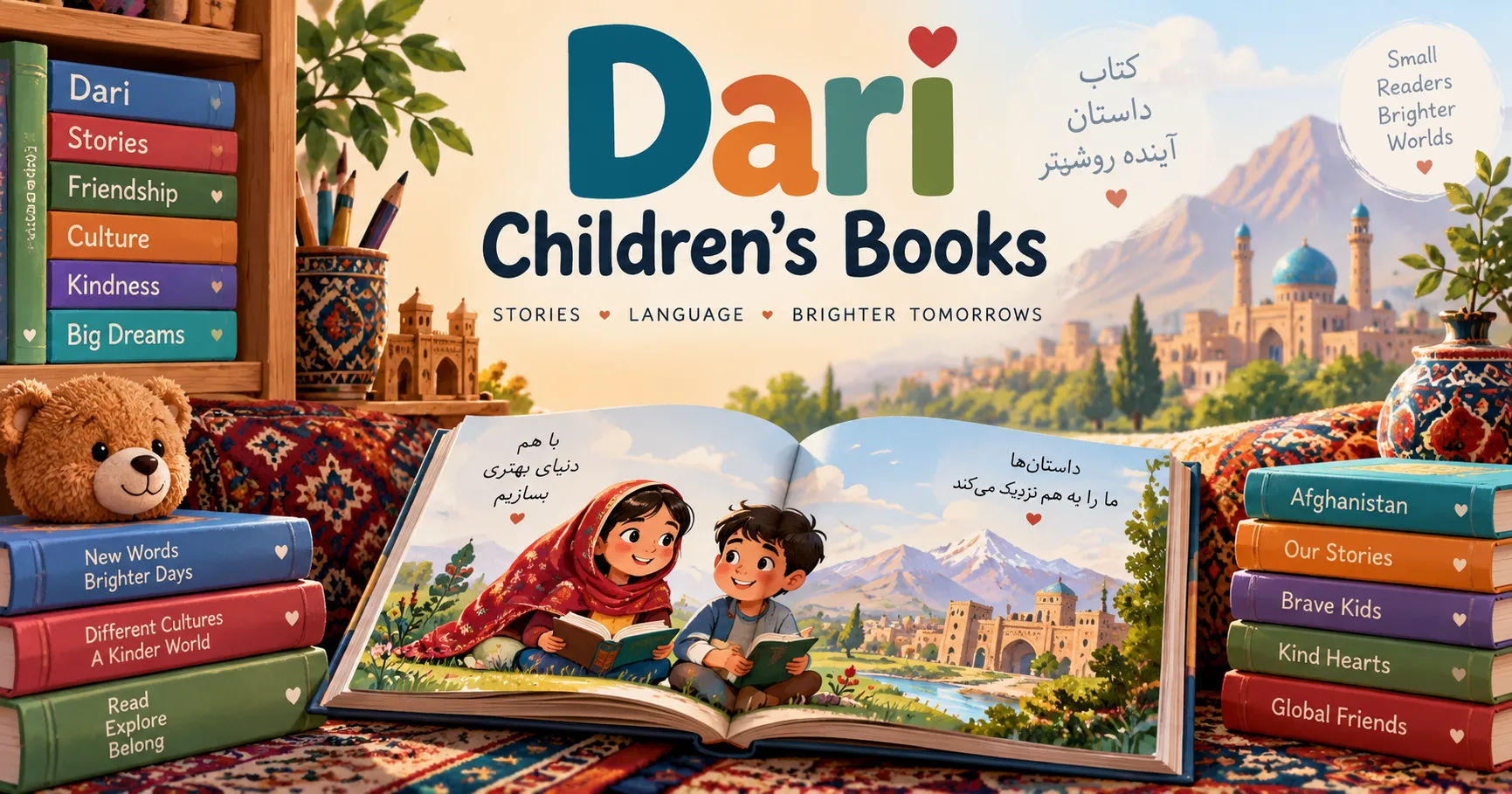
Parents do not need to be fluent teachers or literary experts. What matters most is creating a relaxed reading experience where children can listen, ask questions, look at pictures, and gradually become comfortable with Dari.The way parents read a book can be just as important as the book itself. A child may understand only a few Dari words at first, but repeated exposure can help build vocabulary and confidence. With patience and an enjoyable routine, reading can become a natural part of family life.
Why Reading Dari Books With Children Matters
Dari children's books can introduce children to vocabulary, sentence patterns, stories, characters, and cultural ideas in an age-appropriate way. Regular reading also gives children exposure to language outside everyday conversations.
Children learn languages through repeated experiences. Hearing the same words in different stories helps them recognize meanings and remember expressions. Pictures provide another layer of understanding because children can connect words with objects, actions, and emotions.
For families who speak Dari at home, books can strengthen children's connection with the language. For families where Dari is less commonly spoken, books can provide an additional opportunity for children to hear and practice it.
Books Create Natural Language Exposure
Formal language lessons can sometimes feel like schoolwork. Storytime feels different.
A parent can introduce new words naturally while discussing what is happening in the story. Instead of asking a child to memorize vocabulary, the parent can point to an illustration and use the Dari word repeatedly.
This approach gives children context. They hear how words are used rather than learning isolated terms.
Stories Can Build Cultural Understanding
Children's stories often contain family relationships, traditions, everyday experiences, celebrations, and cultural references. Reading these stories can help children understand parts of their family's linguistic and cultural background.
Parents can explain unfamiliar traditions without turning the reading session into a long lecture. A short explanation at the right moment is usually enough.
Choose Books That Match the Child's Level
Parents should select books according to the child's age, language ability, interests, and attention span. A book that is too difficult can make reading frustrating.
A beginner may benefit from books with large illustrations, repeated phrases, and simple sentences. A more advanced reader can handle longer stories and richer vocabulary.
Start With Familiar Topics
Children often respond well to subjects they already understand. Animals, family members, school, food, friendship, and daily activities are useful starting points.
When the topic is familiar, children can use their existing knowledge to understand new Dari words.
Consider the Child's Interests
A child who loves animals may be more willing to listen to a Dari story about animals than a story about a topic they find boring.
Interest can motivate children to stay engaged even when they do not understand every word.
Before Reading the Book
Parents can make reading easier by spending a few minutes looking at the book before beginning the story.
Look at the cover together. Ask the child what they think the story might be about. Examine the illustrations and identify familiar objects.
This preparation builds curiosity.
Parents can also choose two or three words that may be important in the story. There is no need to introduce every unfamiliar word before reading.
Talk About the Pictures
Picture discussion is particularly helpful for younger children.
Ask simple questions about what they see. For example, a parent might point to an animal and say its name in Dari. The child can repeat it if they want to.
This makes the child an active participant rather than a passive listener.
How Parents Should Read Dari Children's Books
Parents should aim for a natural and expressive reading style. The goal is not to pronounce every sentence perfectly or translate every word.
Read slowly enough for the child to follow, but avoid making the story unnecessarily slow.
Use facial expressions and changes in tone when appropriate. A funny character can have a playful voice, while a quiet scene can be read more softly.
Read the Story More Than Once
Repetition is one of the most useful tools in language learning.
During the first reading, focus mainly on understanding the story. During later readings, pause occasionally to discuss words, characters, or events.
A child may understand much more during the third or fourth reading than during the first.
Repeated stories also help children predict what comes next. That prediction can encourage them to participate.
Do Not Translate Every Sentence
Parents sometimes feel that they must translate everything immediately. This is not always necessary.
If the illustration makes the meaning clear, allow the child to understand through context.
For example, if a character is eating an apple and the parent uses the Dari word for apple, the child can connect the word with the picture.
Translation is useful when a word is important but cannot be understood from context. However, constant translation can interrupt the flow of the story.
Use Questions During Storytime
Questions can encourage children to think about both the story and the language.
Parents can ask simple questions such as who a character is, what they are doing, where they are going, or what might happen next.
The difficulty should match the child's language level.
Ask Open-Ended Questions
Open-ended questions can encourage longer responses.
Instead of asking only whether a character is happy, ask why the character might be happy.
The child does not need to answer entirely in Dari. If they respond in another language, parents can gently provide the Dari vocabulary they need.
Encourage Predictions
Before turning a page, ask what the child thinks will happen next.
Predictions make reading interactive. They also give children a reason to pay attention to details in the illustrations and story.
Allow Children to Mix Languages
Children who are developing two languages may naturally switch between them.
A child might understand a Dari sentence but answer in English or another language. This does not mean that the reading session has failed.
Parents can respond naturally and model the Dari expression without criticizing the child's choice.
For example, if the child names something in another language, the parent can repeat the idea using Dari.
This creates additional exposure without making the child feel embarrassed.
Make Bilingual Reading Comfortable
For families using Dari children's books, parents can take advantage of both language versions without turning storytime into a translation exercise.
The parent might read one section in Dari and then briefly discuss the meaning in the child's stronger language. Another option is to read the same story in both languages at different times.
Compare the Two Languages
Older children may enjoy noticing differences between Dari and another language.
Parents can discuss how the same character or object is described differently. This can build language awareness and help children understand that different languages organize ideas in different ways.
However, comparison should remain enjoyable rather than becoming a grammar lesson.
Let the Child Choose the Language
Children may have preferences.
Sometimes they may want the story read completely in Dari. At other times, they may prefer more explanation in another language.
Giving children some choice can make them feel more comfortable and involved.
Help Children Learn New Dari Vocabulary
Parents do not need to teach dozens of words during one story.
Choose a small number of useful words and repeat them naturally.
For example, if a story contains words related to family, parents can focus on a few family terms. If the story is about animals, they can emphasize several animal names.
Use the Words After Reading
Vocabulary becomes stronger when children encounter words outside the book.
After finishing the story, parents can use some of the new words during daily activities.
If the story introduced a word for a particular food, parents might use that word during a meal. If it introduced an animal, they can repeat the word when they see that animal in a picture or video.
This connects reading with real life.
Encourage Children to Retell the Story
Retelling is a powerful reading activity.
After finishing the book, ask the child to explain what happened. Younger children can use pictures to guide their retelling.
They do not need to reproduce the story word for word.
The purpose is to help them organize ideas and practice language.
Use Pictures as Prompts
If the child struggles to retell the entire story, turn the pages again.
Ask what is happening in each picture. The child can describe characters, actions, and settings using whatever Dari vocabulary they know.
Parents can fill in missing words gently.
Create a Regular Reading Routine
Consistency is more valuable than having an extremely long reading session once a week.
Even a short daily reading period can give children regular exposure to Dari.
Choose a time when the child is comfortable. Bedtime is popular, but afternoon reading can work equally well.
Keep Sessions Flexible
Some days children may want several stories. On other days, they may lose interest quickly.
Parents should not treat every reading session like a test.
If the child is tired, a shorter story may be enough. The long-term goal is to associate Dari reading with positive experiences.
What Parents Should Avoid
Parents should avoid correcting every pronunciation mistake.
Too many corrections can make children nervous about speaking. Instead, model the correct pronunciation naturally.
For example, if a child mispronounces a word, the parent can repeat the sentence correctly without making the mistake the center of attention.
Parents should also avoid forcing children to translate every sentence or memorize every new word.
Storytime works best when children have space to enjoy the narrative.
Make Reading More Interactive
Dari books can become the starting point for many activities.
After reading, children can draw their favorite character, act out a scene, create a different ending, or talk about their favorite part.
These activities reinforce understanding while keeping the language connected to creativity.
Let Children Ask Questions
Children may ask about unfamiliar words, characters, customs, or situations.
Parents should welcome these questions.
If the parent does not know the answer, it is perfectly reasonable to say that they will look up the information later. Reading together is a learning experience for both parent and child.
How Older Children Can Read Independently
As children become stronger readers, parents can gradually give them more responsibility.
An older child can read short sections aloud, summarize paragraphs, or explain unfamiliar words.
Parents can still participate without controlling the entire session.
For families using bilingual book bundles, older children can also compare passages between languages and identify words they recognize.
This can turn reading into an independent learning activity.
Building Confidence Over Time
Language development takes time. Some children understand Dari long before they feel comfortable speaking or reading it.
Parents should recognize these different stages.
A child who listens quietly today may begin repeating phrases after several weeks of exposure. Another child may suddenly start using vocabulary from a favorite story during everyday conversation.
Progress is not always immediate or obvious.
The most useful approach is steady exposure, encouragement, and patience.
Conclusion
Parents can make reading Dari children's books an enjoyable and educational family activity by focusing on connection rather than perfection. Choosing books that match the child's ability, discussing pictures, reading expressively, repeating favorite stories, and asking simple questions can all support language development.
For families raising children with multiple languages, bilingual book bundles can provide additional opportunities to connect Dari stories with another familiar language. Parents can read in both languages, compare expressions, or simply choose whichever approach keeps the child interested.
The most important part of the process is consistency. Children do not need to understand every word during the first reading. They need repeated opportunities to hear language, see it in context, discuss stories, and enjoy books with someone they trust.
With a patient approach, storytime can become more than a reading exercise. It can help children develop vocabulary, strengthen comprehension, explore culture, and build a lasting relationship with the Dari language. Whether the child is just beginning to recognize Dari words or already reading independently, supportive parents can make every book a valuable learning experience.