

Learning the Quran does not always require long study sessions or complicated lessons. For many students, beginning with short surahs is a practical and encouraging way to build confidence, improve recitation, and develop a regular connection with the Quran. 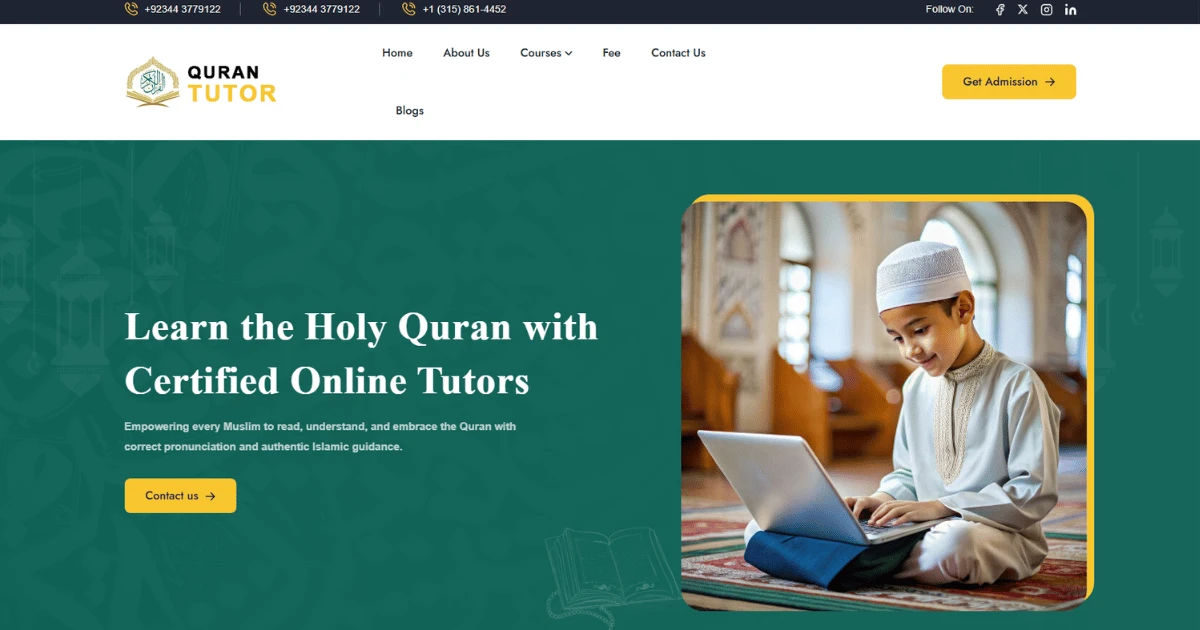 With the right teaching method, an Online Quran Teacher can guide students through short surahs just as effectively as longer passages.
Short surahs are often among the first portions of the Quran that children, teenagers, and beginners learn. They are frequently used in daily prayers, making accurate pronunciation and memorization especially valuable. Online lessons can provide structured practice, individual correction, and flexible scheduling for students who cannot attend a traditional Quran class.
This guide explains how online Quran lessons can help students learn short surahs, what a typical lesson includes, how teachers correct mistakes, and what parents and students should consider when choosing a suitable teacher.
Why Short Surahs Are Important for Quran Learning
Short surahs are an excellent starting point for students who are new to Quran reading or memorization. Their shorter length makes them less intimidating, while their frequent use in salah gives students an immediate practical reason to learn them.
Surahs such as Al-Ikhlas, Al-Falaq, An-Nas, Al-Kawthar, Al-Asr, and Al-Ma'un are commonly included in beginner learning programs. Students can gradually develop their reading skills while memorizing passages that they may use regularly in prayer.
Learning short surahs also helps students experience progress quickly. Completing a short passage can motivate a beginner to continue studying and eventually move toward longer surahs.
Another benefit is repetition. Because short surahs can be reviewed frequently, students have more opportunities to strengthen pronunciation, fluency, and memorization.
Can an Online Quran Teacher Teach Short Surahs Effectively?
Yes. An Online Quran Teacher can teach short surahs effectively when lessons are organized around the student's current ability.
Online teaching can actually provide several advantages for this type of learning. A student can read directly to the teacher through a video or audio connection, while the teacher listens carefully to pronunciation and identifies mistakes.
The teacher can divide a surah into manageable sections. Instead of asking a beginner to memorize an entire surah immediately, the teacher may introduce one or two verses at a time.
The student reads the verse several times while looking at the Quran. After becoming comfortable with the words, the student attempts to recite without looking.
This approach makes the learning process gradual rather than overwhelming.
What Does a Short Surah Lesson Usually Include?
A good online lesson normally follows a clear structure. The exact format depends on the student's age, level, and goals, but several activities are particularly useful.
Reviewing Previous Lessons
A teacher may begin by asking the student to recite material learned during the previous lesson.
This review helps identify whether the student has remembered the verses correctly. It also prevents students from moving forward while carrying unresolved pronunciation or memorization problems.
Introducing New Verses
After revision, the teacher introduces new material.
The teacher may read the verse first and ask the student to listen carefully. The student then repeats it while paying attention to pronunciation, pauses, and letter sounds.
Correcting Pronunciation
Pronunciation is one of the most important parts of Quran learning. A student may recognize the words but still pronounce certain Arabic letters incorrectly.
An experienced teacher can listen for these problems and provide immediate correction.
Practicing Memorization
Once the student can read the verses correctly, memorization can begin.
The teacher may ask the student to repeat a verse several times before combining it with the next verse. This creates a sequence that becomes easier to remember through repetition.
Testing the Student
Near the end of the lesson, the teacher may ask the student to recite independently.
This gives the teacher an opportunity to evaluate progress and decide what should be reviewed during the next class.
How Online Teachers Correct Quran Recitation
One concern some parents have is whether pronunciation can really be corrected online. In practice, live audio and video lessons allow teachers to hear students recite in real time.
The teacher can stop the student when an error occurs and explain the correction.
For example, Arabic contains letters whose sounds may be unfamiliar to students who speak other languages. A student might confuse similar sounds or pronounce a letter using the nearest sound available in their native language.
A knowledgeable teacher can demonstrate the correct sound and ask the student to repeat it.
The process often requires patience. Pronunciation habits do not always change after one correction. Repeated practice is usually necessary.
Can Short Surahs Be Taught With Tajweed Online?
Yes. Short surahs can be used to introduce and practice Tajweed rules.
In fact, short passages can be useful for beginners because teachers can focus on a limited number of verses rather than introducing too many rules at once.
A teacher may explain rules involving elongation, nasal sounds, clear pronunciation, merging, stopping, and other aspects of Quranic recitation as they appear in the student's lesson.
The important point is that Tajweed should be taught at an appropriate level. A young beginner does not necessarily need an overwhelming list of technical terms during the first lesson.
A practical teacher can explain a rule, demonstrate it, and allow the student to practice it immediately.
Is Online Learning Suitable for Children?
Online Quran lessons can work well for children, particularly when the teacher knows how to maintain attention.
Children may lose focus during long sessions, so short and interactive lessons are often more effective.
An Online Quran Teacher working with children may use repetition, questions, visual cues, and positive encouragement to keep the student involved.
Parents can also support the process by creating a quiet learning environment and making sure the child has the necessary device, internet connection, and Quran.
Consistency is especially important for children. A short lesson several times a week can be more productive than an occasional long session.
How Teenagers Can Learn Short Surahs Online
Teenagers often have different learning needs from younger children.
They may already know some basic Quran reading and want to improve pronunciation, memorization, or Tajweed. They may also prefer a more independent learning style.
A teacher can adapt lessons accordingly.
Instead of spending most of the session on basic alphabet recognition, the teacher can focus on fluency, accurate recitation, memorization techniques, and understanding the meaning of the verses.
Teenagers can also benefit from learning the meanings of short surahs. Understanding what they recite can make memorization more meaningful and encourage greater reflection.
Can Beginners Learn Short Surahs Without Knowing Arabic?
A student does not need to speak Arabic fluently before learning short surahs.
Many Quran learners begin without understanding Arabic as a conversational language. Their first objective may be to recognize Arabic letters, pronounce them correctly, and read Quranic words.
However, learning basic meanings alongside memorization is highly beneficial.
The teacher can explain the general meaning of a surah in a language the student understands. This helps the learner connect the words with their message instead of treating memorization as a purely mechanical activity.
How Long Does It Take to Learn a Short Surah?
There is no universal timeframe.
The answer depends on the length of the surah, the student's previous Quran experience, memorization ability, pronunciation, age, and practice routine.
A very short surah may be learned relatively quickly by an experienced reader. A beginner may need considerably more time because they are simultaneously learning Arabic pronunciation and memorization.
Quality should be more important than speed.
A student who memorizes a surah quickly but repeatedly makes pronunciation errors may need additional correction later. Taking sufficient time to establish accurate recitation creates a stronger foundation.
The Importance of Regular Practice
Online lessons are only one part of Quran learning. Practice between classes is equally important.
Students should review recently learned verses regularly rather than waiting until the next lesson.
Even a few minutes of daily revision can help reinforce memorization. Students can recite the surah during appropriate daily practice and review older material alongside new material.
A useful routine might involve reviewing one previously learned surah before practicing a new one.
This prevents older memorization from becoming weak while new material is being added.
How Parents Can Support Online Quran Learning
Parents can make a major difference in a child's progress.
First, they can establish a consistent lesson schedule. Regularity makes Quran study part of the child's routine rather than an occasional activity.
Second, parents can provide a suitable study environment. The student should have a quiet space where distractions are limited.
Third, parents can encourage practice without turning every mistake into a source of pressure.
Children generally respond better to encouragement and constructive correction than constant criticism.
Parents can also communicate with the teacher about the child's progress, difficulties, and learning goals.
How to Choose the Right Online Quran Teacher
Choosing a suitable teacher requires more than checking availability.
Parents and students should consider the teacher's Quranic knowledge, Tajweed ability, teaching experience, communication style, and experience with the student's age group.
A teacher who is excellent with adults may not necessarily be the best choice for a very young child.
It is also useful to determine whether the teacher provides individualized lessons. Students learn at different speeds, so a one-size-fits-all approach may not work well.
Trial lessons can help families understand how the teacher explains concepts, corrects mistakes, and interacts with the student.
What Technology Is Needed?
The technology requirements are generally straightforward.
Students need a reliable internet connection, a computer, tablet, or smartphone, and an audio device that allows the teacher to hear their recitation clearly.
A camera can be useful for live lessons because it allows the teacher and student to communicate more naturally.
Good audio quality is particularly important for Quran lessons. If the teacher cannot hear the student's pronunciation clearly, accurate correction becomes more difficult.
Students should also keep their Quran and any lesson materials ready before the class begins.
Common Mistakes Students Make
Beginners often make predictable mistakes when learning short surahs.
One common problem is rushing through the verses. Students may focus on finishing the surah rather than maintaining accurate pronunciation.
Another issue is memorizing without understanding the correct sequence of words.
Some students also practice only the newest surah and neglect previously memorized material.
Others depend too heavily on listening without developing independent reading skills.
A good teacher addresses these issues gradually and helps students build balanced skills in reading, recitation, memorization, and revision.
Benefits of Learning Short Surahs Online
There are several practical benefits to online learning.
The first is flexibility. Students may be able to schedule lessons around school, work, family responsibilities, or other commitments.
The second is individual attention. One-to-one lessons allow the teacher to concentrate on the student's specific mistakes.
The third is convenience. Students can study from home without traveling to a physical learning center.
Another benefit is continuity. Students who move or have changing schedules may be able to continue studying with the same teacher online.
For many families, these advantages make online Quran education a practical option.
How Students Can Make Faster Progress
Progress does not necessarily come from studying for very long periods.
Instead, students should focus on consistent and purposeful practice.
Before each lesson, reviewing the previous material can help. During the lesson, students should listen carefully to corrections rather than simply repeating words automatically.
Afterward, they should practice the corrected sections.
It is also helpful to keep new memorization manageable. Learning a smaller amount accurately is generally more productive than memorizing a large amount with repeated errors.
Students should also avoid becoming discouraged when a surah takes longer than expected. Quran learning is a gradual process, and accuracy develops through repetition.
Frequently Asked Questions
Can an Online Quran Teacher teach very short surahs to complete beginners?
Yes. Short surahs are often appropriate for beginners because they allow students to work with manageable amounts of Quranic text while developing reading and recitation skills.
Can Tajweed be taught during short-surah lessons?
Yes. Teachers can introduce relevant Tajweed rules while students practice specific verses. The level of instruction should match the student's experience.
How often should a student practice?
Daily practice is helpful, even if the practice session is brief. Consistency is usually more valuable than occasional long study sessions.
Can children memorize short surahs online?
Yes. Children can memorize short surahs through structured repetition, teacher guidance, and regular revision. Lessons should be age-appropriate and engaging.
Should students learn meanings as well as memorization?
Learning the general meaning can make memorization more meaningful and help students understand what they are reciting.
Conclusion
An Online Quran Teacher can absolutely teach short surahs effectively. With live instruction, careful listening, pronunciation correction, Tajweed practice, memorization exercises, and regular revision, students can develop strong Quranic foundations from home.
Short surahs are particularly suitable for beginners because they offer achievable learning goals while introducing important recitation skills. They also give students practical material that can be used in daily prayers.
The success of online learning depends largely on the quality of instruction and the student's consistency. A knowledgeable teacher should adapt lessons to the learner rather than forcing every student through the same pace and method.
Students should focus on accurate pronunciation, steady memorization, regular revision, and understanding the basic meaning of what they recite. Parents can support younger learners by maintaining a predictable schedule and providing encouragement.
With patience and consistent practice, online Quran learning can become an effective and convenient way to master short surahs while building skills that support continued Quran study.