

Mobile gaming has become one of the most popular forms of entertainment for children, teenagers, and adults. People enjoy playing games on smartphones during their free time, while travelling, or even before going to sleep. Although mobile games can improve certain skills, spending too much time looking at a small screen may affect eye comfort and overall visual health. 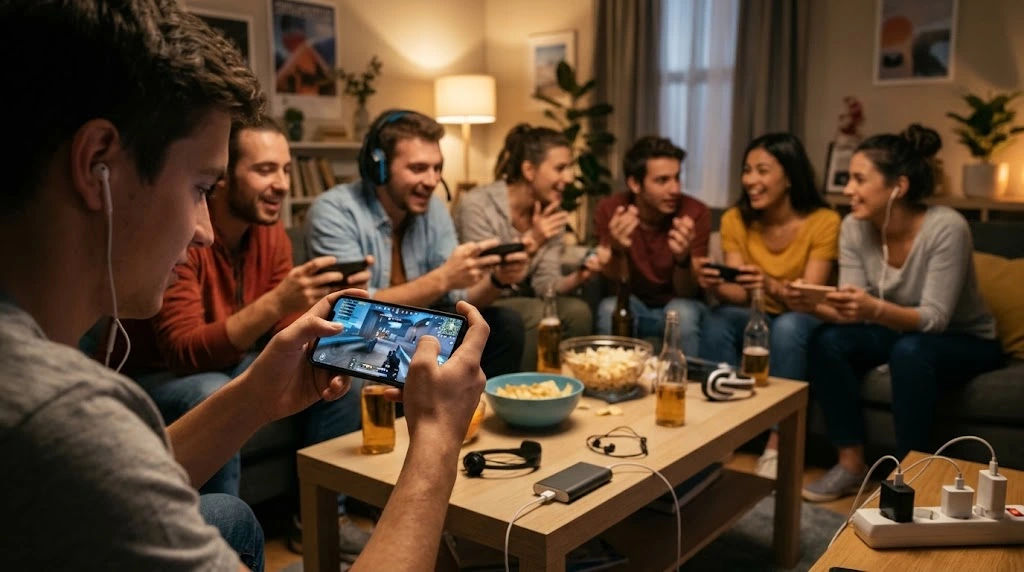 This raises an important question: Can mobile gaming affect eyesight?
The answer depends on how long someone plays, how closely they hold their device, and whether they take regular breaks. Mobile gaming does not automatically cause permanent eye damage, but excessive screen use can lead to digital eye strain, dry eyes, headaches, and temporary blurred vision. Children and teenagers may also face additional concerns because their eyes are still developing.
Understanding the relationship between gaming and eye health can help players develop better habits. With suitable screen settings, regular breaks, and balanced daily routines, people can enjoy their favourite games while reducing unnecessary eye discomfort.
The Relationship Between Mobile Gaming and Eyesight
Mobile gaming requires players to concentrate on a digital screen for extended periods. Unlike outdoor activities, gaming usually involves looking at objects from a relatively short distance.
During gameplay, the eyes continuously focus on colourful images, moving characters, small objects, and changing backgrounds. This activity requires concentration and coordination between the eye muscles.
When someone plays for several hours without resting, the visual system may become tired. The eyes might feel uncomfortable, and the player may experience temporary changes in vision.
These symptoms are commonly associated with digital eye strain, also known as computer vision syndrome.
It is important to understand that eye strain and permanent eye damage are not the same thing. Most screen-related discomfort improves after resting the eyes and reducing screen exposure.
How Mobile Gaming Can Affect Your Eyes
There are several ways excessive gaming can affect eye comfort and visual performance.
1. Digital Eye Strain
Digital eye strain is one of the most common problems associated with extended screen use.
When players concentrate on a game, they may forget to blink regularly. Blinking helps spread tears across the surface of the eyes, keeping them comfortable and properly moisturised.
Reduced blinking can cause dryness and irritation.
Common symptoms include:
-
Tired or uncomfortable eyes.
-
Blurred vision.
-
Burning or itching sensations.
-
Difficulty focusing after gaming.
-
Headaches around the forehead.
-
Increased sensitivity to light.
These symptoms usually become more noticeable after long gaming sessions.
Taking regular breaks and maintaining comfortable viewing conditions can help reduce digital eye strain.
2. Dry Eyes
Dry eyes can develop when someone spends too much time looking at a smartphone.
Normally, people blink frequently throughout the day. However, concentration on digital screens can reduce blinking, allowing tears to evaporate more quickly.
As a result, the eyes may feel dry, scratchy, or irritated.
People who already experience dry eyes may notice greater discomfort during long gaming sessions. Contact lens users can also experience additional dryness.
Players should make a conscious effort to blink regularly. If dryness continues, an eye specialist may recommend suitable lubricating eye drops.
3. Temporary Blurred Vision
Another possible effect of excessive screen use is temporary blurred vision.
When players focus on a nearby screen for a long time, their eye-focusing system remains engaged at a close distance. After finishing a game, they may temporarily struggle to focus clearly on distant objects.
For example, someone might notice that a television or road sign looks slightly blurry immediately after playing on a smartphone.
This problem may improve after taking a break.
However, repeated or persistent blurred vision should not automatically be blamed on gaming. It may indicate an existing vision problem that requires professional attention.
4. Headaches and Eye Discomfort
Some players experience headaches after spending several hours playing games.
These headaches may develop because of prolonged concentration, uncomfortable screen brightness, glare, poor posture, or uncorrected vision problems.
Fast-moving graphics and continuous visual stimulation may also make certain players uncomfortable.
People who play games in dark rooms with very bright screens may experience additional discomfort.
Adjusting screen brightness and taking regular breaks can make gaming more comfortable.
5. Difficulty Focusing
Extended close-up screen activities require the eyes to maintain focus at a relatively short distance.
After a long gaming session, some people experience difficulty switching their focus between nearby and distant objects.
This problem is generally temporary, but frequent symptoms should be discussed with an optometrist or ophthalmologist.
Players should avoid continuing a game when their eyes feel unusually tired or their vision becomes unclear.
Can Mobile Gaming Cause Permanent Eye Damage?
One common concern among parents and regular gamers is whether smartphone games can permanently damage eyesight.
According to the American Academy of Ophthalmology, looking at digital screens for long periods can cause discomfort, but ordinary screen exposure has not been shown to permanently damage the eyes.
This distinction is important.
Digital eye strain can make vision feel temporarily uncomfortable without necessarily causing permanent injury.
However, excessive screen use can contribute to unhealthy habits. For example, children who spend most of their free time playing indoors may miss opportunities for outdoor activities.
Research suggests that spending more time indoors and doing prolonged close-up activities are associated with an increased risk of developing myopia, commonly called nearsightedness.
Therefore, the concern is not simply the game itself. The amount of close-up activity and the overall lifestyle also matter.
Does Mobile Gaming Increase the Risk of Nearsightedness?
Nearsightedness is a vision condition in which nearby objects appear clear while distant objects look blurry.
It commonly develops during childhood and adolescence, although adults can also experience changes in their vision.
Researchers have investigated the relationship between increased screen use, close-up activities, and myopia.
Spending extended periods focusing on nearby objects may be associated with a greater risk of developing nearsightedness, particularly among children.
However, mobile gaming is not the only possible cause.
Other close-up activities, including reading books, studying, drawing, and using computers, also require sustained near vision.
Spending time outdoors is an important part of maintaining healthy visual development. Research indicates that outdoor activities can help reduce the risk of myopia in children.
Parents should encourage children to balance indoor entertainment with outdoor play, exercise, and other activities.
How Long Should You Play Mobile Games?
There is no single gaming duration that guarantees protection from every eye problem.
The appropriate amount of screen time depends on age, daily responsibilities, existing vision conditions, and individual comfort.
However, avoiding long, uninterrupted gaming sessions is a useful starting point.
Adults should take frequent breaks instead of playing continuously for several hours.
Children need additional attention because screen entertainment should not replace sleep, physical activity, education, or social interaction.
Parents can establish reasonable gaming schedules that leave enough time for other activities.
The most important principle is to create a balanced routine rather than focusing only on the number of minutes spent playing.
Effective Ways to Protect Your Eyes During Mobile Gaming
Players do not necessarily need to stop gaming to maintain healthy eyes. Developing appropriate habits can make screen use more comfortable.
1. Follow the 20-20-20 Rule
The 20-20-20 rule is a simple technique for reducing digital eye strain.
It recommends that every 20 minutes, players should:
-
Stop looking at the screen.
-
Look at something approximately 20 feet away.
-
Continue looking for at least 20 seconds.
This gives the eyes an opportunity to relax from continuous close-up focusing.
Players can use phone reminders to develop this habit.
Taking a longer break between gaming sessions can also be beneficial.
2. Maintain a Comfortable Viewing Distance
Holding a smartphone extremely close to the face may increase visual discomfort.
Players should maintain a comfortable distance that allows them to read game information without squinting or leaning forward.
Avoid bringing the screen too close simply to see small details.
Increasing the game interface size, where possible, can also improve comfort.
3. Adjust Screen Brightness
Screen brightness plays an important role in viewing comfort.
A screen that is significantly brighter than the surrounding environment may cause discomfort.
Similarly, a screen that is too dark can make players strain their eyes while trying to understand game details.
Adjust brightness according to the lighting conditions in the room.
Automatic brightness settings can help maintain a suitable display level.
4. Play in a Properly Lit Room
Playing mobile games in complete darkness is not a good habit.
A bright smartphone screen surrounded by a dark environment can create uncomfortable differences in brightness.
Players should use comfortable room lighting when gaming.
Avoid direct reflections from windows or overhead lights because glare can make screen content difficult to see.
A properly lit environment can improve viewing comfort and reduce unnecessary visual effort.
5. Remember to Blink
Blinking is a natural process that keeps the eyes moisturised.
Unfortunately, players may blink less frequently when concentrating on challenging games.
This can contribute to dryness and irritation.
Make a habit of blinking regularly, especially during competitive matches or games that require intense concentration.
If your eyes feel dry, pause the game and give them an opportunity to recover.
6. Avoid Playing for Long Periods Without Breaks
Continuous gaming can increase the likelihood of eye discomfort.
Instead of playing for several hours without interruption, divide gaming time into shorter sessions.
Use breaks to walk around, drink water, stretch, or look outside.
These activities provide a welcome change from focusing on a nearby screen.
7. Keep Your Smartphone Screen Clean
A dirty smartphone screen can make images less clear and create unnecessary distractions.
Fingerprints, dust, and smudges may reduce display clarity.
Clean the screen regularly using an appropriate microfiber cloth.
Avoid using harsh cleaning chemicals that could damage the device.
Although cleaning the screen does not directly prevent eye disease, it helps maintain a comfortable viewing experience.
Does Blue Light From Mobile Games Damage Your Eyes?
Blue light is frequently discussed in conversations about smartphone use and eye health.
Digital screens produce blue light, which is part of the visible light spectrum.
Many people believe that blue light from mobile games permanently damages the retina. However, current evidence does not establish that ordinary exposure to blue light from consumer screens causes permanent eye damage.
The American Academy of Ophthalmology does not recommend special blue-light-blocking glasses for preventing digital eye strain.
Nevertheless, screen exposure in the evening can affect sleep patterns.
Blue light can influence the body's natural sleep-wake cycle. Playing exciting games late at night may also make it harder to relax before bedtime.
Players can improve their sleep habits by:
-
Avoiding gaming immediately before sleeping.
-
Reducing screen brightness in the evening.
-
Using night-mode settings when comfortable.
-
Maintaining a consistent bedtime.
-
Keeping smartphones away from the bed when possible.
Protecting sleep is another important reason to manage screen habits.
How Mobile Gaming Affects Children's Eyes
Children are particularly important when discussing screen habits because their visual systems are still developing.
Many children enjoy colourful mobile games, puzzles, racing games, and adventure challenges.
Although these activities can provide entertainment, excessive screen use may encourage long periods of close-up focusing.
Children may also forget to take breaks because they become deeply involved in gameplay.
Parents should pay attention to the following warning signs:
-
Frequent eye rubbing.
-
Squinting while looking at distant objects.
-
Complaints of headaches.
-
Holding smartphones very close to the face.
-
Blurred vision after gaming.
-
Red or watery eyes.
-
Difficulty concentrating on distant objects.
Parents should encourage outdoor play and make sure children have enough time for schoolwork, physical activity, and sleep.
If a child repeatedly complains about vision problems, arrange an eye examination instead of assuming that the symptoms are simply caused by gaming.
Is Mobile Gaming More Harmful Than Other Screen Activities?
Mobile gaming is not necessarily more harmful to eyesight than reading, watching videos, or using social media.
The important factors include viewing distance, screen exposure, lighting, blinking habits, and the amount of time spent without breaks.
However, gaming can encourage prolonged concentration because players often want to finish a level, win a competition, or complete a mission.
This can make it easier to forget about resting.
Some games also contain fast-moving graphics, flashing effects, and visually demanding scenes.
These features may cause discomfort in sensitive individuals.
Therefore, players should pay attention to their personal symptoms rather than assuming that every type of screen activity affects everyone in the same way.
When Should You Visit an Eye Specialist?
Occasional eye tiredness after gaming is common, but certain symptoms should receive professional attention.
Consider arranging an eye examination if you experience:
-
Blurred vision that does not improve after resting.
-
Frequent or severe headaches.
-
Persistent eye dryness or irritation.
-
Difficulty focusing on distant objects.
-
Repeated redness or excessive watering.
-
Eye pain or unusual light sensitivity.
-
Double vision.
Sudden vision loss, severe eye pain, or sudden new visual disturbances require urgent medical assessment.
An eye specialist can determine whether symptoms are related to digital eye strain, an existing vision problem, or another eye condition.
Regular eye examinations are especially important for children and people who already wear prescription glasses.
Common Myths About Mobile Gaming and Eyesight
Several misconceptions make it difficult for people to understand the actual effects of gaming.
Myth 1: Mobile Games Always Damage Eyesight
This is incorrect.
Ordinary screen use has not been established as a direct cause of permanent eye damage. However, excessive gaming can cause temporary discomfort and may contribute to unhealthy close-up viewing habits.
Myth 2: Blue-Light Glasses Are Necessary for Every Gamer
Blue-light-blocking glasses are not essential for everyone.
There is insufficient evidence that they prevent screen-related eye damage or reliably reduce digital eye strain.
Comfortable screen settings and regular breaks are more practical steps.
Myth 3: Only Children Experience Gaming-Related Eye Problems
Adults can also experience digital eye strain.
Anyone who spends extended periods focusing on a digital screen may develop dry eyes, headaches, and temporary blurred vision.
Myth 4: Playing With the Lights Off Is Better
Playing in complete darkness is not necessarily more comfortable.
The difference between screen brightness and surrounding lighting may contribute to visual discomfort.
Using suitable room lighting is a better approach.
Myth 5: Resting for a Few Minutes Solves Every Eye Problem
Breaks can help relieve temporary eye strain, but they cannot correct every vision condition.
Persistent symptoms may require prescription glasses, treatment for dry eyes, or professional assessment.
Understanding these differences helps gamers make informed decisions about their eye health.
Creating a Healthy Mobile Gaming Routine
A healthy gaming routine does not require giving up entertainment.
Instead, players should combine responsible screen habits with activities that support general well-being.
Start by choosing suitable gaming periods that do not interfere with work, education, or sleep.
Set reminders to take breaks and avoid holding the smartphone too close to your face.
Make outdoor activities part of your daily routine, especially for children and teenagers.
Maintain a comfortable gaming environment with appropriate lighting and screen brightness.
It is also helpful to avoid playing when you already have headaches, eye discomfort, or blurred vision.
If you wear prescription glasses, make sure your prescription is current and suitable for your visual needs.
Small changes can make a meaningful difference in how comfortably you use digital devices.
Conclusion
Mobile gaming is an enjoyable activity that provides entertainment, challenges, and opportunities to develop certain skills. However, spending excessive time looking at a smartphone screen can affect eye comfort and contribute to digital eye strain.
The most common problems include dry eyes, temporary blurred vision, headaches, and difficulty focusing after long gaming sessions. These symptoms are generally temporary, but persistent discomfort should never be ignored.
Although ordinary screen exposure has not been proven to cause permanent eye damage, children and teenagers should maintain a healthy balance between indoor screen activities and outdoor experiences. Extended close-up activities and limited outdoor time are important considerations when discussing the development of nearsightedness.
Following the 20-20-20 rule, adjusting screen brightness, maintaining a comfortable viewing distance, blinking regularly, and taking frequent breaks can help reduce unnecessary eye strain.
Ultimately, responsible gaming is about maintaining balance. Players can continue enjoying their favourite games while making their eye health a priority. By developing healthy screen habits and seeking professional advice when necessary, individuals can enjoy digital entertainment without allowing it to take over their daily lives.