

When choosing custom salon aprons, the material matters just as much as the design. A salon apron needs to look professional, feel comfortable during long working hours, and protect clothing from hair, water, dyes, oils, and other salon products. Because of this, salon aprons are made from several different fabrics, each offering its own advantages.
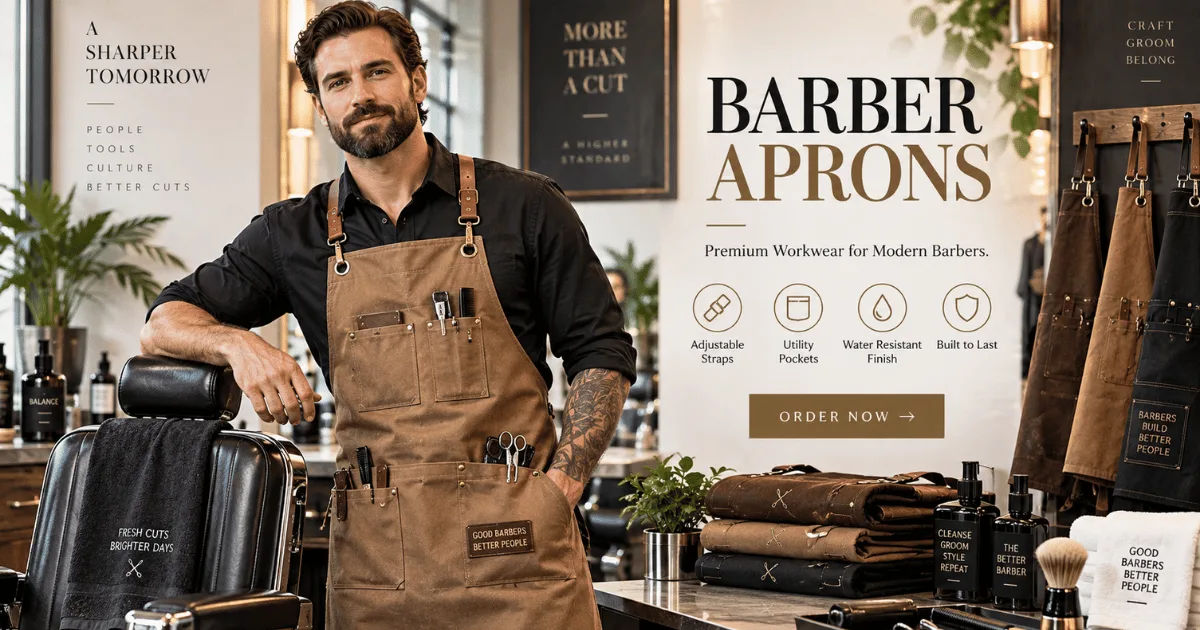
The most common materials include polyester, cotton, cotton-polyester blends, denim, canvas, nylon, and water-resistant synthetic fabrics. The best option depends on the type of salon work, how often the apron will be washed, the desired appearance, and the level of protection required.
A stylist who spends most of the day cutting hair may have different requirements from a colorist who regularly works with hair dye and chemical products. Understanding the materials available makes it easier to select an apron that performs well instead of choosing one based only on appearance.
Why Does the Material of a Salon Apron Matter?
A salon apron is working clothing, not simply an accessory. It is exposed to constant movement, frequent washing, moisture, hair clippings, and sometimes chemical products.
The fabric therefore needs to handle everyday wear without quickly becoming uncomfortable or damaged.
Material also affects breathability. A thick fabric may provide excellent durability but feel warm during a busy day. A lightweight fabric may be cooler but offer less protection.
The right balance depends on the working environment.
For example, a busy hair salon may prioritize easy cleaning and durability, while a boutique barber shop may place greater importance on appearance and traditional fabrics such as denim or canvas.
Polyester Salon Aprons
Polyester is one of the most common materials used for professional salon aprons. It is a synthetic fiber known for durability, resistance to shrinking, and relatively easy maintenance.
Polyester fabrics can handle repeated washing without losing their shape as quickly as some natural fibers. This makes them practical for salons where aprons are worn and washed frequently.
Another advantage is that polyester can be manufactured in many weights and finishes. Lightweight polyester can provide a comfortable option for long shifts, while heavier versions can offer additional durability.
Advantages of Polyester
Polyester is popular because it offers several practical benefits.
It generally dries quickly after washing, which is useful when staff need clean aprons regularly. It also tends to resist wrinkles, helping employees maintain a neat appearance throughout the working day.
Polyester can also hold colors well. This makes it suitable for businesses that want aprons featuring specific brand colors, logos, or decorative details.
Potential Drawbacks
Pure polyester may not feel as breathable as natural cotton. In a warm salon, especially one with several styling stations and heated equipment, this can become noticeable.
The quality of the fabric also matters. A low-quality polyester apron may feel thin or uncomfortable even though the material itself is durable.
Cotton Salon Aprons
Cotton is another popular choice for custom salon aprons, particularly for businesses that prioritize comfort and a natural fabric feel.
Cotton is soft, breathable, and comfortable against clothing. These characteristics make it appealing for stylists who wear an apron for many hours at a time.
Cotton can also create a more relaxed and traditional appearance. It is often selected by salons that want their uniforms to feel premium without looking overly industrial.
Benefits of Cotton
The main advantage of cotton is comfort.
Because cotton allows air to move through the fabric, it can feel more comfortable in warm environments. It also absorbs moisture, which can be useful when working in a busy setting.
Cotton is available in different weights. Lightweight cotton can provide a comfortable everyday apron, while heavier cotton can offer greater durability.
What About Cotton's Limitations?
Cotton can absorb liquids, which is not always ideal when working with water, hair color, bleach, or other salon products.
It can also wrinkle more easily than polyester and may shrink if washed incorrectly. For this reason, care instructions should be followed carefully.
A cotton apron can be an excellent choice when comfort and appearance are more important than maximum resistance to moisture.
Cotton-Polyester Blends
For many salons, a cotton-polyester blend provides a useful middle ground.
These fabrics combine characteristics of both materials. Cotton can contribute softness and breathability, while polyester can improve durability, shape retention, and resistance to shrinking.
The exact performance depends on the ratio of the fibers. A fabric with more cotton may feel softer and more breathable, while a higher polyester content may provide greater resistance to wrinkles and moisture.
Why Blended Fabrics Are Popular
Blended fabrics are practical because salons often need several qualities at once.
Stylists want comfort, but salon owners also need uniforms that survive frequent washing. Employees want an apron that looks professional, while the business wants something that does not require excessive maintenance.
A well-made blend can balance these requirements.
For many everyday salon environments, this makes cotton-polyester fabric one of the most versatile choices.
Denim Salon Aprons
Denim is commonly used for stylish, durable custom salon aprons. It provides a distinctive appearance while offering substantial resistance to everyday wear.
Denim can give a salon a modern, professional, or slightly industrial aesthetic. It is particularly popular among barbers, boutique salons, and businesses that want their staff uniforms to stand out.
The fabric is usually thicker than lightweight polyester or cotton, which can provide good protection from hair and minor spills.
Is Denim Comfortable?
Denim can be comfortable, but weight matters.
Heavy denim may become warm during long working periods. A lighter denim fabric can provide a similar visual style while making the apron easier to wear throughout the day.
The design also matters. Adjustable straps, a suitable length, and properly positioned pockets can make a heavy fabric much more practical.
Canvas Salon Aprons
Canvas is another durable material used in professional aprons.
It is a tightly woven fabric that can withstand considerable daily use. Canvas aprons are often selected when durability and structure are important.
The fabric can provide a sturdy appearance and works particularly well with large pockets. This is useful for stylists or barbers who need to carry combs, clips, scissors, brushes, or other small tools.
However, canvas can be heavier than lightweight synthetic fabrics. It may not be the best choice for someone working in a very warm environment.
Nylon Salon Aprons
Nylon is a lightweight synthetic material that can offer useful resistance to moisture and everyday wear.
It is often chosen for practical work environments because it is relatively easy to clean and dries quickly.
Nylon can also be used in water-resistant apron designs. This can be useful when stylists regularly work with water, shampoos, conditioners, or other liquids.
However, breathability varies considerably between nylon fabrics. A tightly coated or heavily treated nylon apron may feel warmer than a lightweight, breathable version.
Water-Resistant and Coated Fabrics
Some custom salon aprons use fabrics with water-resistant coatings or treatments.
These aprons are designed to reduce the amount of liquid that penetrates the fabric. This can be particularly useful for hair colorists and stylists who frequently work with wet hair.
A water-resistant apron does not necessarily mean it is completely waterproof. These terms are sometimes used casually, but they describe different levels of protection.
A coating can also affect how the fabric feels. Some treated materials may feel smoother or less breathable than untreated fabric.
Therefore, water resistance should be considered alongside comfort.
What Materials Are Best for Hair Stylists?
Hair stylists usually need an apron that balances comfort, durability, and easy maintenance.
A cotton-polyester blend can be a strong everyday option because it combines the comfort of cotton with some of the practical benefits of polyester.
Lightweight polyester can also work well for busy salons, especially when frequent washing and quick drying are important.
Denim and canvas are suitable for stylists who prefer a more structured and fashionable appearance.
The best material ultimately depends on the salon's environment and the stylist's preferences.
What Materials Are Best for Hair Colorists?
Colorists generally need more protection from liquids and staining products.
A synthetic fabric such as polyester or nylon can be practical because these materials may be easier to wipe and clean than absorbent natural fibers.
Water-resistant finishes can provide another layer of convenience.
However, no salon apron should be treated as completely stain-proof. Hair color and chemical products can behave differently depending on their formulation, concentration, exposure time, and the fabric itself.
Quick cleaning is often more important than simply choosing a particular material.
Does Fabric Weight Matter?
Yes. Fabric weight can significantly affect how an apron performs.
Lightweight fabrics are usually cooler and easier to wear for long periods. They can be especially comfortable during busy shifts.
Medium-weight fabrics offer a balance between comfort and protection.
Heavy fabrics such as thick canvas or denim can provide excellent durability and structure, but they may feel warmer and heavier.
The ideal weight depends on the working conditions. A salon located in a warm climate may benefit from lightweight materials, while a cooler environment may make heavier fabrics more comfortable.
What About Apron Straps and Hardware?
The main fabric is important, but it is not the only material to consider.
Apron straps may be made from cotton webbing, polyester webbing, leather, or synthetic materials. Adjustable straps allow the wearer to change the fit according to their body and clothing.
Hardware can include metal or plastic buckles, rings, clips, and adjusters.
Durable hardware is especially important when an apron is put on and removed several times each day. Poor-quality buckles can break even when the main fabric remains in excellent condition.
How Should Salon Apron Materials Be Washed?
Cleaning requirements depend on the fabric and manufacturer.
Polyester generally handles regular washing well, while cotton may require more attention to shrinking and temperature. Denim and canvas can become stiff if they are not washed and dried properly.
Before washing, stains should be treated according to the fabric's care instructions.
It is also important to avoid assuming that every apron can tolerate strong bleach or aggressive chemicals. Some treatments, coatings, printed logos, and decorative elements can be damaged by harsh cleaning products.
Following the manufacturer's care instructions can significantly extend the life of the apron.
How Customization Affects Material Choice
The purpose of custom salon aprons is often to combine practical workwear with a recognizable brand identity.
Different fabrics accept embroidery, printing, patches, and other customization methods differently.
For example, a structured fabric may provide an excellent surface for embroidery, while some lightweight materials may be better suited to certain printing methods.
The location of the logo matters too. A large embroidered design on the chest can add weight, while a small logo may provide a cleaner appearance.
Businesses should consider how the material, customization technique, logo size, and intended washing routine will work together.
Choosing the Right Material for Your Salon
There is no single fabric that is perfect for every salon.
If comfort and breathability are the priority, cotton can be attractive.
If easy maintenance and durability matter most, polyester is often practical.
If you want a balance of comfort and performance, a cotton-polyester blend can make sense.
For a fashionable and rugged appearance, denim or canvas may be better.
For moisture resistance and quick drying, nylon or treated synthetic fabrics can be useful.
The smartest choice is based on actual working conditions rather than simply selecting the fabric that looks best in a product photograph.
Questions to Ask Before Ordering
Before buying custom salon aprons, consider how the aprons will actually be used.
Think about how many hours employees wear them each day. Consider whether the salon is warm or cool, whether workers regularly handle hair color, how often the aprons will be washed, and whether employees need multiple pockets.
Also consider the desired appearance.
A luxury salon may want a refined, minimal design, while a modern barber shop may prefer rugged denim. A busy family salon may prioritize easy cleaning above everything else.
The material should support the work rather than create another problem.
Conclusion
The materials used to make custom salon aprons range from natural fibers such as cotton to synthetic materials such as polyester and nylon. Blended fabrics, denim, canvas, and water-resistant materials provide additional choices for different professional environments.
There is no universal winner. Cotton is comfortable and breathable, but it can absorb moisture. Polyester is durable and easy to maintain, but some versions may feel less breathable. Cotton-polyester blends offer a practical balance. Denim and canvas provide durability and a distinctive appearance, while nylon and coated fabrics can offer useful moisture resistance.
The best apron is therefore the one that matches the actual demands of the salon. Consider comfort, durability, cleaning requirements, fabric weight, moisture exposure, customization, and overall appearance before making a decision.
A well-chosen apron should protect clothing, support the stylist's daily work, and contribute to a consistent professional image. When these factors are considered together, choosing the right material becomes much easier.