

Starting a clothing brand no longer means ordering thousands of pieces before you know whether customers will actually buy them. A low MOQ clothing manufacturer gives startups, small fashion labels, online sellers, and established brands a way to produce smaller quantities while testing designs, fabrics, and markets with less financial risk.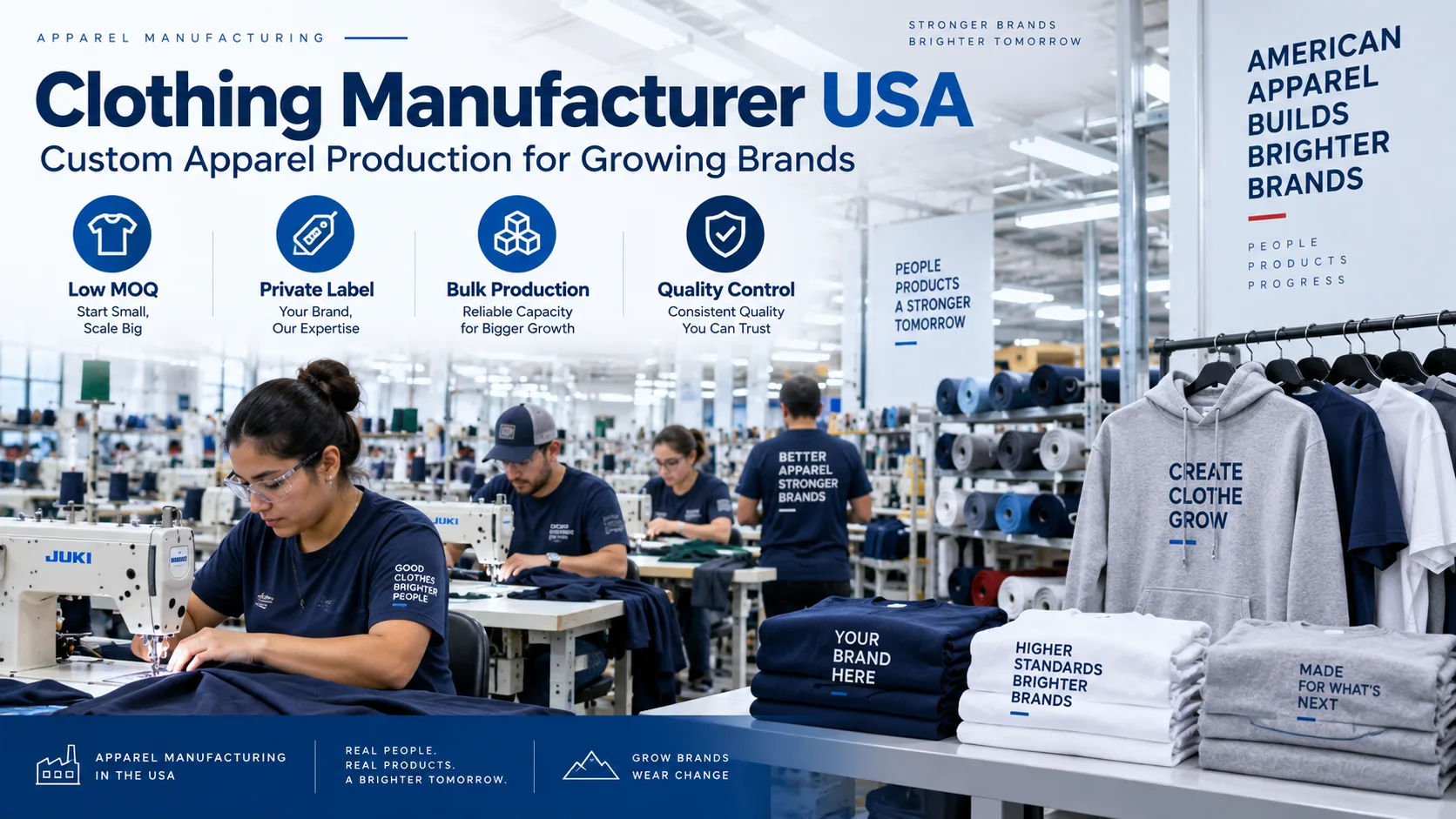
Low minimum order quantities are especially useful when you want to launch a limited collection, test a new product, create custom garments, or avoid filling your storage space with unsold inventory. However, many people assume that low MOQ production is limited to basic T-shirts or simple garments. That is not necessarily true.
A capable manufacturer can produce many different types of apparel in smaller quantities, depending on the factory's machinery, workforce, fabrics, production process, and customization capabilities.
What Does Low MOQ Mean in Garment Manufacturing?
MOQ stands for Minimum Order Quantity. It refers to the smallest number of garments a manufacturer is willing to produce for one order or one particular design.
For example, a traditional factory may require you to order 500, 1,000, or even several thousand pieces of one style. A low MOQ clothing manufacturer may accept orders starting from 20, 50, 100, or 200 pieces, depending on the garment and customization requirements.
The exact MOQ is not universal.
A manufacturer may offer a low MOQ for a simple T-shirt but require a higher quantity for a complicated jacket with multiple panels, custom hardware, embroidery, and special fabric.
This is why it is important to discuss your complete product requirements rather than asking only, "What is your MOQ?"
T-Shirts and Basic Tops
T-shirts are among the easiest products for a low MOQ manufacturer to produce.
They can be made in cotton, organic cotton, polyester, cotton blends, bamboo fabrics, or other materials. Depending on the manufacturer, you may also be able to choose different fabric weights and finishes.
A brand can order basic crew-neck T-shirts, oversized T-shirts, fitted styles, long-sleeve versions, cropped T-shirts, or heavyweight streetwear designs.
Customization can include neck labels, woven labels, printed graphics, sleeve prints, embroidery, hangtags, packaging, and custom colors.
Because T-shirts have relatively straightforward construction, they are often a practical choice for a new brand testing its first collection.
Hoodies and Sweatshirts
Hoodies and sweatshirts are also commonly available from a low MOQ clothing manufacturer.
These products are particularly popular with streetwear brands, lifestyle companies, sports brands, university merchandise businesses, and online clothing stores.
A manufacturer may produce pullover hoodies, zip-up hoodies, oversized hoodies, cropped hoodies, crewneck sweatshirts, and heavyweight fleece designs.
You can often customize the garment through fabric weight, color, embroidery, screen printing, puff printing, patches, labels, drawstrings, and other details.
However, complex hoodies may require more development work than basic T-shirts. Custom zippers, special washes, unusual panels, and multiple decorations can increase production costs.
Dresses
Small-batch garment manufacturing is not limited to casualwear.
Many manufacturers can produce dresses in relatively small quantities, including casual dresses, summer dresses, maxi dresses, mini dresses, bodycon dresses, shirt dresses, and occasionwear.
The manufacturer may work from your technical drawing, sample, measurements, or tech pack.
You can specify fabric, length, neckline, sleeve style, closures, lining, trims, and other design elements.
For a new fashion brand, low-volume dress production can be useful because different styles can be tested without committing to a huge inventory.
Shirts and Blouses
Button-up shirts and blouses can also be produced in smaller quantities.
These may include formal shirts, casual shirts, oversized shirts, linen shirts, cropped shirts, women's blouses, and fashion-forward designs.
Shirts usually require more construction details than a basic T-shirt. Collars, cuffs, buttons, buttonholes, plackets, and stitching all need careful attention.
A good low MOQ clothing manufacturer can help brands produce these details while maintaining consistent sizing and finishing.
If you want a custom shirt, it is useful to provide a detailed tech pack showing measurements and construction requirements.
Pants and Trousers
Pants are another category that can be manufactured in small batches.
Manufacturers may produce joggers, sweatpants, cargo pants, trousers, wide-leg pants, leggings, shorts, and other styles.
Pants require accurate measurements because customers notice poor fit quickly.
Important specifications include waist measurement, rise, inseam, leg opening, pocket placement, waistband construction, and fabric stretch.
For this reason, sample approval is particularly important before starting bulk production.
Jeans and Denim Garments
Denim production can be more complicated, but some manufacturers offer low-volume denim production.
Possible products include jeans, denim jackets, denim skirts, denim shorts, and denim shirts.
Customization can include washes, fading, distressing, embroidery, patches, buttons, rivets, leather labels, and special stitching.
The challenge is that denim often involves additional processes such as washing and finishing. These processes can affect MOQ and pricing.
If your brand is built around premium denim, ask the manufacturer specifically about its washing, finishing, and quality-control capabilities.
Jackets and Outerwear
A capable low MOQ clothing manufacturer may also produce jackets and other outerwear.
Examples include bomber jackets, varsity jackets, denim jackets, lightweight windbreakers, work jackets, overshirts, puffer jackets, and fashion coats.
Outerwear generally requires more materials and construction steps than basic clothing.
Zippers, linings, pockets, padding, buttons, hardware, ribbing, and multiple fabric panels can all affect the production process.
For this reason, low MOQ does not always mean low production cost. A small order of a complicated jacket can have a relatively high per-unit price.
Activewear and Sportswear
Some manufacturers specialize in sportswear and can produce smaller quantities of activewear.
Products may include leggings, sports bras, gym tops, cycling shorts, tracksuits, running shirts, and training shorts.
These garments often require stretch fabrics and technical construction.
A manufacturer may offer moisture-wicking materials, compression fabrics, four-way stretch fabrics, flat seams, elastic waistbands, and custom prints.
If your brand targets fitness customers, ask about fabric performance rather than focusing only on appearance.
A garment can look excellent but still perform poorly during exercise if the fabric or construction is unsuitable.
Children's Clothing
Small-batch manufacturers may also produce children's clothing.
Possible products include children's T-shirts, hoodies, dresses, trousers, pajamas, jackets, and matching sets.
Children's apparel requires additional attention to sizing, comfort, construction, and safety requirements.
Depending on where you intend to sell, there may also be specific product safety and labeling requirements.
A manufacturer experienced in children's clothing is generally a better choice than a factory that mainly produces adult fashion.
Uniforms and Workwear
Low-volume production can be useful for businesses that need uniforms without ordering huge quantities.
Manufacturers may produce polo shirts, work shirts, trousers, jackets, aprons, scrubs, and other workplace garments.
Logos can often be added through embroidery, printing, woven patches, or other decoration methods.
This can be useful for restaurants, salons, gyms, construction companies, hospitality businesses, and small corporate teams.
Custom Streetwear
Streetwear brands are one of the strongest users of low MOQ production.
A small brand can experiment with oversized silhouettes, heavyweight cotton, unique graphics, embroidered logos, patches, custom labels, and unusual washes.
Instead of launching 2,000 pieces of one design, a brand might test several designs in smaller quantities.
This makes it easier to identify which products customers actually want.
For emerging brands, this flexibility can be more valuable than getting the absolute lowest manufacturing price.
Private Label Clothing
Private label production allows a business to sell garments under its own brand.
The manufacturer may provide an existing garment pattern or develop a product based on the buyer's requirements. Custom branding can then be added through neck labels, woven labels, hangtags, packaging, and other details.
A low MOQ clothing manufacturer can make private labeling more accessible to small businesses that cannot meet the large minimums required by traditional factories.
This model is commonly used by ecommerce brands, boutique stores, influencers, and entrepreneurs launching their own clothing lines.
Custom Embroidery and Printing
Garment production is not only about cutting and sewing.
Many manufacturers can also provide decoration services.
These may include screen printing, digital printing, embroidery, puff embroidery, patches, appliqué, heat transfers, and other techniques.
The right method depends on the design.
For example, a simple one-color logo may be inexpensive to print, while a detailed embroidered design can require more setup and production time.
Before approving production, ask for a sample so you can evaluate the actual appearance rather than relying only on digital artwork.
Custom Labels and Packaging
Brand identity can extend beyond the garment itself.
A manufacturer may produce or attach woven labels, printed care labels, size labels, hangtags, stickers, polybags, tissue paper, boxes, and other packaging elements.
These details can make a small clothing brand look much more established.
However, custom packaging may have its own minimum quantities. A manufacturer willing to produce 50 garments may still require a larger order for specially manufactured boxes or certain custom accessories.
How Customization Affects MOQ
The more complicated the garment becomes, the more likely it is that production requirements will change.
A plain T-shirt with one logo may have a low MOQ.
The same T-shirt with custom fabric, special dyeing, multiple embroidery locations, custom trims, woven labels, unusual stitching, and custom packaging may require a higher MOQ.
This happens because each additional component creates extra setup, purchasing, labor, and quality-control requirements.
That does not mean you cannot make complex products in small quantities. It simply means you should discuss the complete specification with the factory before assuming the same MOQ applies.
What Can Affect the Production Quantity?
Several factors influence what a low MOQ clothing manufacturer can realistically produce.
Fabric Availability
Common fabrics are usually easier to source in small quantities.
Special fabrics, unusual colors, custom prints, and exclusive materials may require larger purchasing commitments.
Number of Colors
Producing one color is generally simpler than producing ten colors.
Every additional color can create more cutting, dyeing, inventory, and quality-control requirements.
Number of Sizes
A product offered in multiple sizes needs its production quantity divided among those sizes.
For example, ordering 100 garments across five sizes means you may have only a small number of pieces in each size.
A manufacturer can help you develop a practical size breakdown.
Product Complexity
Simple garments are easier to manufacture in low quantities.
Highly structured garments require more time, materials, and technical work.
Custom Components
Zippers, buttons, labels, trims, special hardware, and custom fabrics can introduce additional minimum quantities.
Why Low MOQ Production Is Useful for New Brands
The biggest advantage is risk management.
A new brand does not always know which designs will sell.
Ordering a huge quantity can create a serious inventory problem if customers do not respond to the product.
Low MOQ production allows you to test the market.
You can launch a small collection, collect customer feedback, analyze sales, and then reorder the strongest products.
This approach can also help improve cash flow.
Instead of spending most of your budget on inventory, you can reserve money for photography, advertising, packaging, website development, and customer service.
Is Low MOQ Always Cheaper?
No.
This is one of the most important things to understand.
A small order usually costs more per piece than a large production run.
Factories become more efficient when producing larger quantities because fabric cutting, machine setup, labor, and other production expenses are spread across more garments.
Therefore, low MOQ is primarily about flexibility and reduced inventory risk, not necessarily the lowest possible unit price.
A smart brand should compare both unit cost and total financial risk.
How to Choose the Right Manufacturer
Do not choose a factory based only on its advertised MOQ.
Look at its experience with your type of clothing.
Review samples carefully.
Ask about fabric sourcing, production timelines, quality control, customization, packaging, shipping, and payment terms.
It is also useful to ask whether the manufacturer handles pattern making and sampling or expects you to provide a complete technical package.
Communication matters too.
A manufacturer that responds clearly and understands your requirements can save you considerable time during production.
Questions to Ask Before Placing an Order
Before working with a low MOQ clothing manufacturer, ask:
-
What is the minimum quantity per style?
-
Does the MOQ apply per color or per size?
-
Can you provide samples before bulk production?
-
What fabrics are available?
-
Can I use custom fabrics?
-
Can you create custom labels?
-
What printing and embroidery methods do you offer?
-
How long does sampling take?
-
How long does bulk production take?
-
What quality-control process do you use?
-
Can you provide packaging?
-
What happens if defective garments are found?
Getting clear answers before paying a deposit can prevent many unpleasant surprises later.
Conclusion
A low MOQ clothing manufacturer can produce far more than basic T-shirts. Depending on the factory's capabilities, small-batch production can include hoodies, sweatshirts, dresses, shirts, blouses, pants, denim, jackets, activewear, children's clothing, uniforms, workwear, and customized streetwear.
Manufacturers can also provide branding services such as embroidery, printing, labels, hangtags, and packaging.
The main advantage of low MOQ production is flexibility. You can test new designs, launch limited collections, respond to customer demand, and reduce the amount of money tied up in inventory.
At the same time, low MOQ does not automatically mean low cost. Complex garments, special fabrics, custom colors, trims, and packaging can increase production requirements and per-unit pricing.
The best approach is to start with a clear product specification and ask the manufacturer exactly what it can produce at your desired quantity. Approving samples before bulk production is also essential, particularly for products where fit, fabric quality, or finishing directly affects customer satisfaction.
For a new or growing clothing brand, the right low MOQ clothing manufacturer can provide a practical middle ground between expensive large-scale manufacturing and trying to produce everything yourself. Instead of guessing what customers will buy, you can launch carefully, learn from actual sales, and increase production when demand justifies it.
That is ultimately what makes low MOQ manufacturing valuable: it gives smaller brands room to experiment without forcing them to take on unnecessary inventory risk.