

Software testing has become more challenging as applications continue to grow in size and complexity. Modern applications frequently receive updates, new features, and design changes. While automation testing helps teams save time and improve accuracy, traditional automated tests often fail when small changes are made to the application.
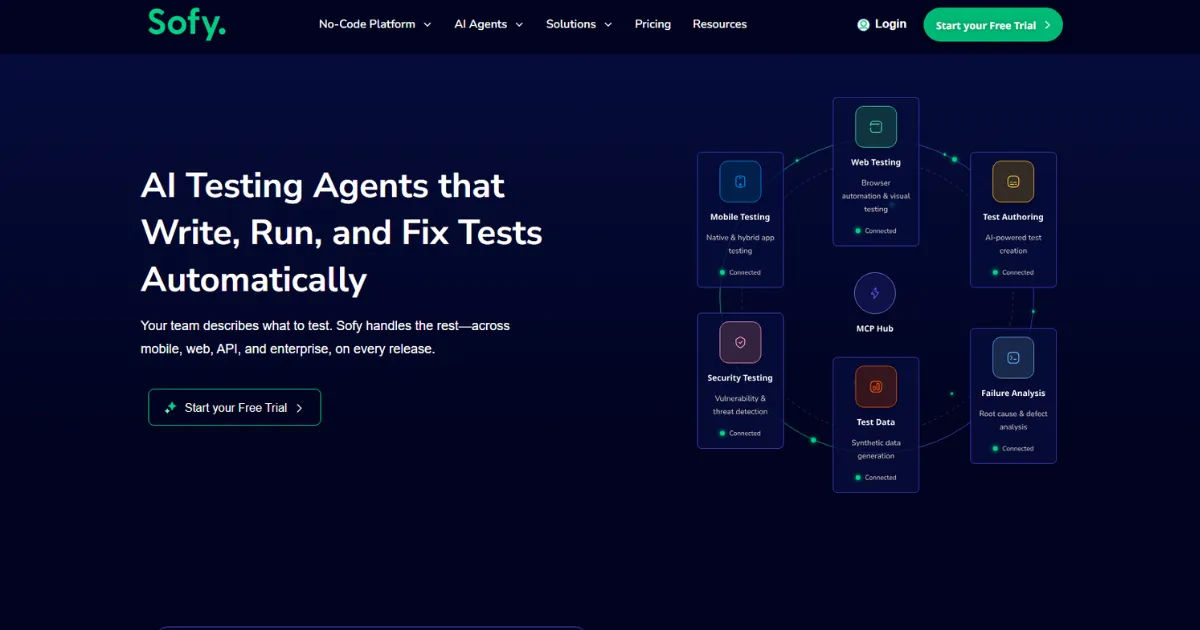
This is where self-healing test automation becomes valuable. It is an advanced approach that allows automated tests to identify changes, adjust themselves, and continue running without requiring constant manual updates.Self-healing test automation uses artificial intelligence, machine learning, and smart algorithms to detect changes in an application's user interface or structure.
Instead of stopping when an element changes, the automation system can find alternative ways to locate the required element and complete the test successfully.This technology helps organizations reduce maintenance efforts, improve testing speed, and create more reliable automation frameworks. As software development becomes faster through agile and DevOps practices, self-healing capabilities are becoming an important part of modern quality assurance strategies.
The Concept of Self-Healing Test Automation
Traditional automation testing depends on predefined scripts. These scripts contain specific instructions that tell the testing tool where to click, what information to enter, and how to verify results. However, even a small change in the application can break these instructions.
For example, a developer may change a button name, update a page layout, or modify an element identifier. A traditional automated test may no longer recognize the button and fail immediately. Test engineers then need to manually review the script and update the code.
Self-healing test automation solves this problem by allowing automation tools to adapt to changes automatically. The system analyzes the application and identifies new patterns or alternative elements that match the original purpose of the test.
Instead of treating every change as an error, the automation framework learns from the updated environment and adjusts its behavior. This reduces interruptions and allows testing teams to focus on improving software quality rather than fixing broken scripts.
How Does Self-Healing Test Automation Work?
Self-healing automation works through a combination of artificial intelligence, machine learning, and advanced object recognition techniques. The process usually involves several important steps.
Detecting Changes in the Application
The first step is identifying when something has changed. The testing tool compares the current application structure with previous information stored during earlier test executions.
Changes may include:
-
Modified element names
-
Updated page designs
-
Changed locations of buttons or menus
-
New attributes added to application components
-
Removed or replaced interface elements
When the system notices a difference, it begins searching for a solution instead of immediately marking the test as failed.
Finding Alternative Elements
After detecting a change, the automation tool searches for alternative ways to identify the required element. It may analyze multiple characteristics, including:
-
Text labels
-
Element position
-
Visual appearance
-
Relationship with nearby elements
-
Previous interaction patterns
For example, if a login button changes from "Sign In" to "Access Account," the tool may recognize that both buttons perform the same function and update the test automatically.
Learning From Previous Tests
Machine learning allows self-healing systems to improve over time. The more tests they execute, the more information they collect about application behavior.
The system can recognize common patterns and make better decisions when future changes occur. This learning ability makes self-healing automation more effective than simple rule-based testing methods.
Key Features of Self-Healing Test Automation
Self-healing automation includes several features that make it different from traditional automation approaches.
Automatic Script Maintenance
One of the biggest advantages is reduced script maintenance. Test engineers spend less time repairing broken tests caused by minor application updates.
The automation tool can adjust test steps automatically, allowing teams to maintain large test suites more efficiently.
Intelligent Element Recognition
Modern applications often contain dynamic elements that change frequently. Self-healing systems use intelligent recognition methods to identify elements even when their technical properties are updated.
This makes testing more stable, especially for applications that receive frequent releases.
Improved Test Reliability
Automation failures caused by small changes can slow down development. By adapting automatically, self-healing test automation improves reliability and reduces unnecessary failures.
Teams can trust automated testing results because fewer failures are caused by outdated scripts.
Faster Release Cycles
Companies using agile development need to release software quickly. Manual updates to hundreds of automated test cases can delay releases.
Self-healing capabilities help testing teams keep pace with rapid development cycles by reducing maintenance work and improving efficiency.
Benefits of Self-Healing Test Automation
The adoption of self-healing automation provides several benefits for software development teams.
Reduced Maintenance Costs
Maintaining automation scripts requires significant time and resources. Every application change can require updates across multiple test cases.
By automatically adjusting scripts, self-healing systems reduce the amount of manual maintenance required. This allows teams to use their resources more effectively.
Better Test Coverage
When automation maintenance becomes easier, teams can create more test cases and improve overall coverage. More areas of an application can be tested regularly without increasing workload significantly.
Fewer False Failures
Traditional automation may report failures even when an application works correctly. These false failures happen because the script cannot find an element after a minor change.
Self-healing test automation reduces these unnecessary failures by understanding changes and adapting accordingly.
Increased Productivity
Test engineers can spend more time on important activities such as creating new test scenarios, analyzing results, and improving testing strategies.
Automation becomes a helpful assistant rather than a system that requires constant repairs.
Challenges of Self-Healing Test Automation
Although self-healing automation offers many advantages, it also has some challenges.
Initial Setup Requirements
Implementing intelligent automation requires proper planning and configuration. Teams may need to invest time in selecting suitable tools, training employees, and connecting automation systems with existing workflows.
Accuracy Concerns
Self-healing systems must make correct decisions when identifying replacement elements. If the system chooses the wrong element, it may produce inaccurate test results.
Proper monitoring and validation are necessary to ensure reliable performance.
Tool Limitations
Not every automation tool provides the same level of self-healing capability. Organizations need to evaluate tools carefully based on their application type, testing requirements, and technical environment.
Self-Healing Test Automation vs Traditional Automation
Traditional automation follows fixed instructions. It works well when applications remain stable, but it struggles when frequent changes occur.
Self-healing test automation introduces flexibility by allowing tests to adjust based on real-time application conditions. Instead of depending only on fixed identifiers, it uses intelligent analysis to understand application behavior.
For example, a traditional test may fail because a button ID changes. A self-healing system may recognize the same button through appearance, location, and function, allowing the test to continue.
This difference makes self-healing approaches especially useful for modern applications that are updated regularly.
The Role of Artificial Intelligence in Self-Healing Automation
Artificial intelligence plays a major role in making automation smarter. AI algorithms analyze large amounts of testing data and identify relationships between different application elements.
Machine learning models help automation tools recognize patterns and predict possible solutions when changes occur.
AI also improves decision-making by comparing multiple possible matches and selecting the most appropriate option. This allows automation systems to handle complex applications more effectively.
As artificial intelligence technology continues to improve, self-healing capabilities are expected to become more accurate and powerful.
Best Practices for Implementing Self-Healing Test Automation
Organizations should follow certain practices to get the best results from self-healing automation.
Choose the Right Testing Tool
Different applications have different requirements. Teams should select tools that support their technology stack and provide reliable self-healing features.
Monitor Automated Tests Regularly
Although self-healing reduces maintenance, human oversight remains important. Teams should review test results and confirm that automatic changes are correct.
Combine Automation With Human Expertise
Self-healing systems work best when combined with skilled testers. Human knowledge is still required for designing effective test strategies and understanding business requirements.
Start With Important Test Cases
Organizations can begin by applying self-healing automation to critical workflows. This helps teams measure benefits before expanding usage across the entire testing process.
Future of Self-Healing Test Automation
The future of software testing will continue moving toward intelligent and adaptive solutions. Applications are becoming more complex, and development cycles are becoming faster.
Self-healing automation will likely become a standard feature in many testing platforms. Improvements in artificial intelligence will allow systems to understand applications more deeply and make better adjustments.
In the future, automation tools may not only repair broken tests but also predict possible failures before they happen. This proactive approach could help organizations improve software quality while reducing testing time.
Conclusion
Self-healing test automation represents an important advancement in software quality assurance. It helps automated tests adapt to application changes, reduces maintenance efforts, and improves testing reliability.
Traditional automation remains useful, but modern software environments require more flexible solutions. By using artificial intelligence and machine learning, self-healing systems provide a smarter way to manage automated testing challenges.
Organizations that adopt this approach can achieve faster releases, better test coverage, and improved productivity. While proper implementation and monitoring are still necessary, the benefits make self-healing automation a valuable technology for the future of software development.
As applications continue to evolve, testing methods must evolve as well. Self-healing capabilities provide a practical solution for creating stronger, more efficient, and more dependable automation processes.