

Choosing the right ecommerce website design company is an important decision for any business that wants to sell products online. A professional company should do more than display attractive website designs. It should clearly show its skills, experience, design process, technical capabilities, and ability to create online stores that generate sales.
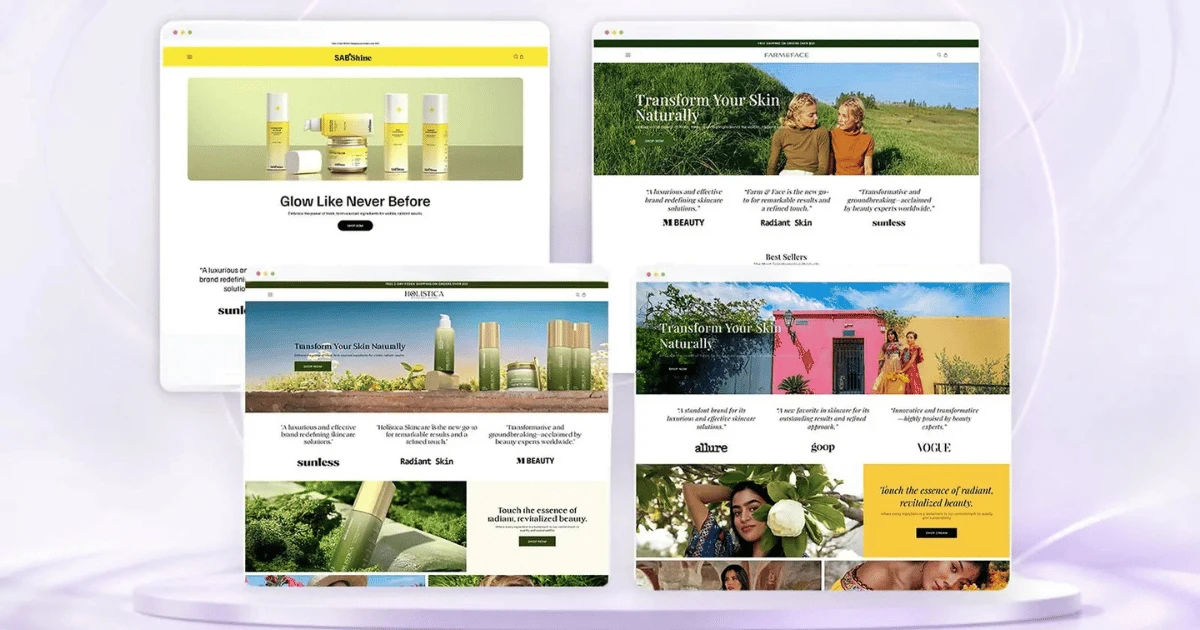
An ecommerce website is often the first major interaction customers have with a brand. If the website is confusing, slow, difficult to navigate, or poorly designed, visitors may leave without making a purchase. For this reason, businesses should carefully evaluate what a design company presents before hiring it.
A strong portfolio can provide valuable information about the company's creativity and experience. However, there are many other factors to consider. From mobile responsiveness and user experience to security, SEO, payment integration, and ongoing support, the company should demonstrate that it understands the complete ecommerce process.
This guide explains the most important things an ecommerce design company should show prospective clients and why each factor matters.
A Strong Portfolio of Ecommerce Projects
The first thing most businesses look at is a company's portfolio. A portfolio gives potential clients an idea of what the company can actually create.
A professional portfolio should contain several real ecommerce projects rather than only sample templates. Look for websites that demonstrate different industries, product categories, and business models.
For example, a company may have designed online stores for fashion brands, electronics retailers, beauty companies, food businesses, or service-based businesses that sell products online.
A diverse portfolio shows that the team can adapt its design approach to different audiences.
Real Examples Instead of Generic Templates
Generic templates do not always demonstrate a company's true ability. A strong portfolio should show customized solutions created around a client's brand and business goals.
The company should explain what challenges each project presented and how the website addressed them.
This gives potential customers a better understanding of the company's problem-solving abilities.
Before-and-After Results
If possible, the portfolio should include information about improvements achieved after a redesign.
Useful examples include:
-
Higher conversion rates
-
Increased online sales
-
Lower bounce rates
-
Improved page speed
-
Increased mobile traffic
-
Better search rankings
-
Improved customer engagement
Results help demonstrate that the company focuses on business performance rather than appearance alone.
Clear Information About the Design Process
A professional ecommerce website design company should explain how it develops an online store.
A clear process helps clients understand what will happen after they sign a contract.
The process may include discovery, research, planning, wireframing, design, development, testing, launch, and ongoing optimization.
Discovery and Research
The company should begin by learning about the business.
Important questions may include:
-
Who are the target customers?
-
What products are being sold?
-
What makes the brand different?
-
Who are the main competitors?
-
What are the company's sales goals?
-
Which devices do customers use?
-
What ecommerce platform is appropriate?
Research helps designers create a website based on actual business needs.
Wireframes and Prototypes
Wireframes provide a basic structure for important website pages.
They help determine where navigation menus, product information, images, buttons, filters, and other elements should appear.
A prototype can then demonstrate how users will move through the website before development begins.
Showing this process is valuable because it demonstrates that the company does not simply start coding without planning.
User Experience Design
An ecommerce website should be easy to use.
A professional company should show how it approaches user experience, commonly called UX.
Visitors should be able to find products, understand product information, add items to their carts, and complete purchases without unnecessary confusion.
Simple Navigation
Navigation should help customers quickly find what they want.
A good ecommerce website may include categories, subcategories, search tools, filters, sorting options, and clear menus.
The company should demonstrate how it organizes complex product catalogs.
Easy Checkout
Checkout is one of the most important parts of an ecommerce website.
If customers encounter too many steps, confusing forms, unexpected fees, or limited payment options, they may abandon their carts.
A professional design company should show examples of simple and streamlined checkout experiences.
Strong Calls to Action
Buttons such as "Add to Cart," "Buy Now," "Checkout," and "Continue Shopping" should be easy to identify.
The design should guide visitors naturally without making the website feel aggressive or cluttered.
Mobile-Responsive Designs
A large percentage of online shopping now happens through smartphones and tablets.
Therefore, a professional ecommerce website design company should show examples of responsive websites that work properly across different screen sizes.
A mobile-friendly website should provide:
-
Easy-to-read text
-
Touch-friendly buttons
-
Fast-loading images
-
Simple mobile navigation
-
Properly sized product images
-
Easy checkout forms
-
Responsive layouts
A website that looks excellent on a desktop but performs poorly on mobile devices can lose a significant number of potential customers.
Ecommerce Platform Expertise
Different ecommerce businesses have different technical requirements.
The company should explain which platforms it works with and demonstrate relevant experience.
Common platforms include Shopify, WooCommerce, Magento, BigCommerce, and custom ecommerce solutions.
Shopify Experience
For businesses that want a relatively simple and scalable hosted solution, Shopify can be an attractive option.
The company should demonstrate its ability to customize Shopify themes, create useful product layouts, integrate applications, and optimize the customer journey.
WooCommerce Experience
WooCommerce is widely used with WordPress.
A company working with WooCommerce should understand product management, payment gateways, shipping configuration, plugins, performance optimization, and security.
Custom Ecommerce Development
Some businesses require custom functionality that standard platforms cannot easily provide.
In such cases, the company should show examples of custom ecommerce development and explain how it handles integrations, databases, APIs, and specialized features.
Product Page Design
Product pages play a major role in purchasing decisions.
A strong design company should show how it creates product pages that provide customers with the information they need.
Important elements can include:
-
High-quality product photography
-
Product descriptions
-
Pricing
-
Product variations
-
Availability information
-
Customer reviews
-
Specifications
-
Shipping details
-
Return information
-
Related products
The goal is to answer customer questions before they leave the page.
High-Quality Product Images
Online shoppers cannot physically touch or examine products.
Good product photography therefore becomes extremely important.
The design should allow customers to view products from different angles and zoom into important details when appropriate.
Reviews and Social Proof
Customer reviews can help establish trust.
The company should demonstrate how reviews, ratings, testimonials, user-generated content, and other forms of social proof can be incorporated naturally into product pages.
Search Engine Optimization
An ecommerce website should not only look good. Customers also need to find it through search engines.
A professional company should demonstrate an understanding of ecommerce SEO.
This can include:
-
SEO-friendly URLs
-
Proper heading structures
-
Optimized title tags
-
Meta descriptions
-
Structured data
-
Image optimization
-
Internal linking
-
Fast loading times
-
Mobile optimization
-
Crawlable navigation
SEO should be considered during the design and development process rather than added as an afterthought.
Website Speed and Performance
Website speed can influence both user experience and business performance.
Slow websites can frustrate visitors and increase abandonment.
A professional company should be able to explain how it handles performance optimization.
This may involve image compression, caching, efficient code, content delivery networks, database optimization, and minimizing unnecessary scripts.
The company should ideally show performance testing results from tools such as Google PageSpeed Insights or similar services.
Security Features
Security is essential for ecommerce businesses because online stores often process personal and payment information.
A trustworthy design company should explain its approach to security.
Important considerations include SSL certificates, secure payment processing, software updates, access controls, backups, and protection against common attacks.
The website should also use reputable payment gateways rather than storing sensitive payment information unnecessarily.
Payment and Shipping Integrations
An ecommerce website must work smoothly with the systems customers use to complete orders.
The company should demonstrate experience integrating payment methods relevant to the target market.
Depending on the business, this may include credit cards, digital wallets, bank transfers, cash-on-delivery systems, or other payment options.
Shipping integrations can also be important.
The website may need real-time shipping calculations, delivery tracking, regional shipping rules, tax calculations, and automated order notifications.
Analytics and Conversion Tracking
A good ecommerce website should provide information about customer behavior.
The design company should explain how it can integrate analytics and tracking tools.
Businesses may want to understand:
-
Where visitors come from
-
Which products receive the most attention
-
How many visitors make purchases
-
Where customers abandon the checkout process
-
Which marketing channels generate sales
-
Which pages perform poorly
This information allows businesses to make better decisions after launch.
Accessibility
An ecommerce website should be usable by as many people as possible, including customers with disabilities.
A responsible design company should demonstrate awareness of accessibility principles.
This can include appropriate color contrast, keyboard navigation, descriptive image text, readable typography, accessible forms, and logical page structures.
Accessibility can improve the experience for all users, not only those who require assistive technologies.
Branding and Visual Identity
An online store should feel like an extension of the company's brand.
The design company should show how it works with logos, colors, typography, photography, illustrations, and other visual elements.
A strong ecommerce website should feel consistent across product pages, checkout screens, emails, advertisements, and social media campaigns.
Consistency can make a business appear more professional and trustworthy.
Customer Testimonials and Reviews
Testimonials can provide valuable evidence of a company's reliability.
An ecommerce design company should ideally display reviews from previous clients.
Look for testimonials that provide specific information rather than vague statements.
For example, a useful testimonial might explain how the company improved a website's user experience, increased sales, completed a project on time, or solved a difficult technical problem.
Case studies are even more valuable because they provide additional context.
Pricing and Project Transparency
Businesses should also look for clear information about pricing.
Not every project will have a fixed price because ecommerce websites can vary greatly in complexity.
However, the company should explain what affects project costs.
Factors may include:
-
Number of pages
-
Number of products
-
Ecommerce platform
-
Custom functionality
-
Integrations
-
Design complexity
-
Content requirements
-
SEO requirements
-
Maintenance needs
The company should also clarify what is included in the quoted price.
Ongoing Support and Maintenance
Launching a website is not the end of an ecommerce project.
Websites need updates, security checks, bug fixes, performance improvements, and sometimes new features.
A professional company should clearly explain its post-launch support options.
Businesses should ask whether support is included, charged separately, or offered through a monthly maintenance plan.
Reliable support can be especially important when an ecommerce store experiences a technical problem during a busy sales period.
Communication and Project Management
Good communication can make the entire development process easier.
The company should explain how clients communicate with the project team and how progress is reported.
Businesses should know who their primary contact will be and how often they will receive updates.
A structured project management process can reduce misunderstandings and keep projects moving forward.
What Red Flags Should Businesses Watch For?
While reviewing an ecommerce design company, businesses should also identify warning signs.
One major red flag is a portfolio containing only generic templates with no real client examples.
Another warning sign is a company that promises guaranteed rankings or unrealistic sales results without understanding the business.
Businesses should also be cautious when a company cannot explain its development process or refuses to discuss security, maintenance, and ownership.
Unclear contracts and extremely low prices can also create problems later.
A professional company should be transparent about costs, timelines, responsibilities, and deliverables.
Questions to Ask Before Hiring
Before making a final decision, ask several practical questions.
How many ecommerce websites have you developed?
Which platforms do you specialize in?
Can you show projects similar to mine?
How do you approach mobile design?
How do you handle SEO?
What security measures do you use?
Which payment and shipping systems can you integrate?
Who owns the website and its content after launch?
What happens if I need changes later?
Do you provide maintenance and technical support?
How do you measure project success?
The answers can help you determine whether the company is a suitable long-term partner.
Conclusion
A professional ecommerce website design company should show much more than attractive screenshots. It should demonstrate a complete understanding of ecommerce design, technology, user behavior, security, SEO, performance, and business goals.
A strong portfolio can show creative ability, while case studies can demonstrate measurable results. A transparent development process can show professionalism, and platform experience can indicate whether the team is technically equipped for the project.
Businesses should also examine mobile responsiveness, product page design, checkout usability, payment integrations, website speed, accessibility, analytics, and ongoing support.
The best ecommerce website is not necessarily the one with the most impressive visual effects. It is the one that makes shopping easy, builds customer trust, performs reliably, and supports the business's long-term goals.
Before hiring a design partner, compare several companies and review their portfolios carefully. Ask detailed questions, verify their experience, understand the project scope, and make sure ownership and support terms are clearly documented.
When these factors are evaluated together, businesses can make a more informed decision and choose a design partner capable of building an online store that is attractive, functional, secure, and prepared for growth.